
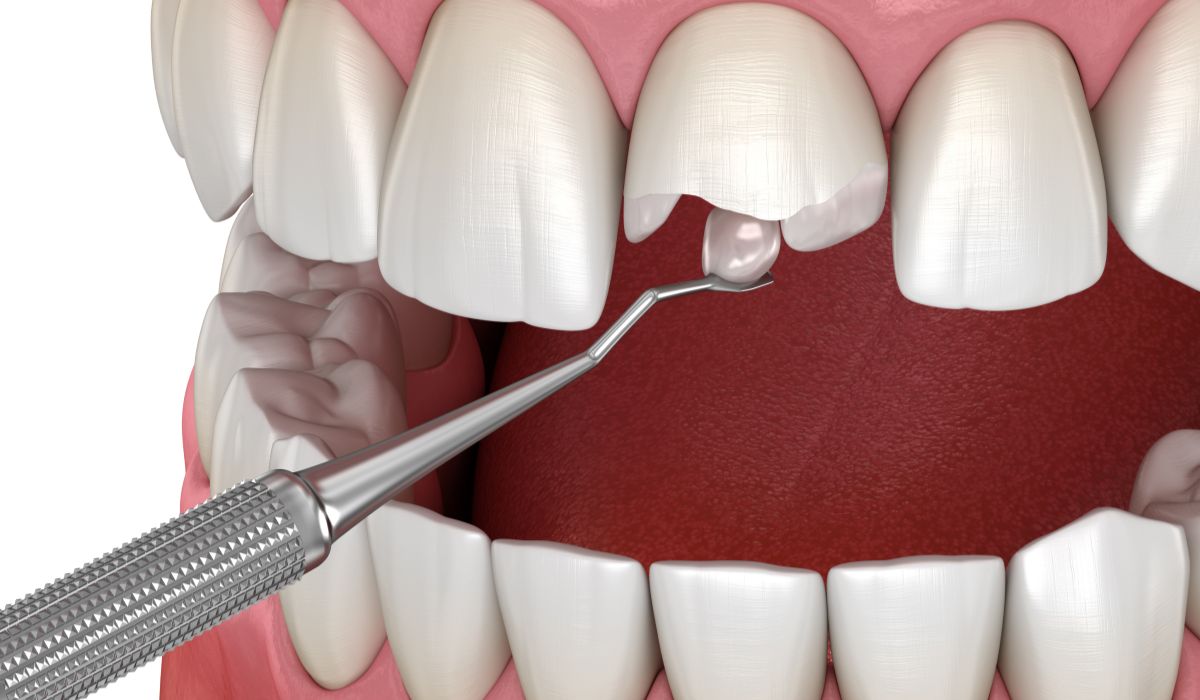
One minute you’re fine, the next you have a sharp object in your mouth where a smooth tooth was. It could have been caused by chewing on something too hard, falling, or perhaps it broke without any apparent reason due to being previously compromised. Regardless of how you got there, breaking a tooth is an event that screams for your immediate attention.
You will be pleased to learn that there are many ways to treat broken teeth on the Main Line, and many people can expect to have their tooth completely restored when they take action quickly and correctly. At Dillon Family Dentistry, we treat dental emergencies all over Bryn Mawr; the patients who do the best are the ones who Stay Calm and act promptly.
Now you are prepared with all the information you need to act without delay.
Key Takeaways
- A broken tooth is a dental emergency; the faster you act, the better your outcome
- How you handle the tooth in the first hour significantly affects treatment options
- Not all breaks are the same; severity determines the repair approach
- Dillon Family Dentistry offers urgent dental care on the Main Line with same-day appointments for dental emergencies
- Modern tooth fracture treatment can restore both function and appearance in most cases
Why a Broken Tooth Is Never “Just Cosmetic”
A chipped edge may make you think that it is not necessary to repair until the next cleaning. There are times when you may be able to wait to fix a chipped edge that is very small; however, in most cases, a broken tooth has several layers that should never be externally exposed and cause a risk to your oral health when they are.
The dentin layer of the tooth is made of porous cells and is sensitive. Underneath this is the dental pulp, which is where the main nerve and blood supply are located. Whenever a break happens (chip) in a tooth or any form of traumatic force to a tooth that penetrates through the dentin layer into the dental pulp layer of the tooth, there will be some form or chance for bacteria to enter and infect those areas and escalate an otherwise manageable repair to a root canal or extraction.
According to the American Association of Endodontists, dental fractures and dental chips are two of the most common reasons for adults to lose their teeth. The earlier you seek treatment for a chip or fracture in a tooth, the easier it will be to repair and the less it will cost to repair your tooth than if you wait to be treated.
What Causes Teeth to Break, and Who It Happens To
While the loss of a tooth may feel sudden, teeth don’t typically break without an underlying cause. The most common reasons for broken teeth that patients come to Dillon Family Dentistry in Bryn Mawr for tooth repair include biting something unexpectedly hard, such as a popcorn kernel or ice, suffering a direct blow from an athletic injury or fall, old, large fillings that have compromised the tooth structure, or untreated decay that has silently hollowed out the tooth from the inside.
Teeth grinding (or bruxism) is yet another cause of broken teeth, since most of our patients who grind their teeth at night do not realise it until they end up with cracked teeth, or their dentist shows them the wear patterns in their teeth.
Over time, as you age, the structure of your teeth will also become more brittle due to years of temperature changes, the stress of chewing, and past dental work.
Anyone can have a broken tooth, and how many teeth each patient has broken depends on whether there is an underlying cause and the underlying characteristics of each tooth. At Dillon Family Dentistry, your dentist will look for underlying risk factors as well as treat the immediate break.
Step-by-Step: What to Do the Moment a Tooth Breaks
How you handle the first hour matters. Here’s what to do before you reach your emergency dentist in Bryn Mawr or on the Main Line.
Step 1: Stay calm and assess the situation
With a softly stroked tongue to feel the region for something sore or out of place (is it sharp; is there blood coming from the gums; can you tell how much tooth is left) does feel bad, but do not touch it with your fingers. Just put this description into your memory, so you can explain it more completely to the dentist when you call.
Step 2: Rinse, but gently
To remove any blood or debris from your mouth after the bleeding has stopped, you can rinse with warm water. You should not rinse with cold or hot water right now, as extreme temperatures may result in heightened sensitivity and discomfort.
You should avoid using too much force when rinsing, as this could cause you to experience increased discomfort.
Step 3: Manage any bleeding
If the gum around the broken tooth is bleeding, apply gentle pressure with clean gauze or a damp tea bag. Most gum bleeding from a tooth break slows within 10 to 15 minutes.
Step 4: Protect the tooth
If a large fragment has broken off, keep it. Place it in a small container of milk or saliva, not water. In some cases, the fragment can be reattached. If the break has left a sharp edge that’s cutting your tongue or cheek, temporary dental wax from a pharmacy can cover it until you’re seen.
Step 5: Manage pain carefully
Over-the-counter pain relievers like ibuprofen can help reduce inflammation and discomfort. Avoid placing aspirin or numbing gels directly on the gum tissue, as this can cause irritation.
Step 6: Call immediately
Contact Dillon Family Dentistry right away. We prioritise dental emergencies in Bryn Mawr and across the Main Line and work to see urgent patients the same day. The sooner we assess the break, the more options remain available for repair.
How Broken Teeth Are Treated, From Minor Chips to Serious Fractures
Treatment depends entirely on the type and severity of the break. Here’s a general picture of how we approach different situations:
- Minor chips affecting only the enamel are o