
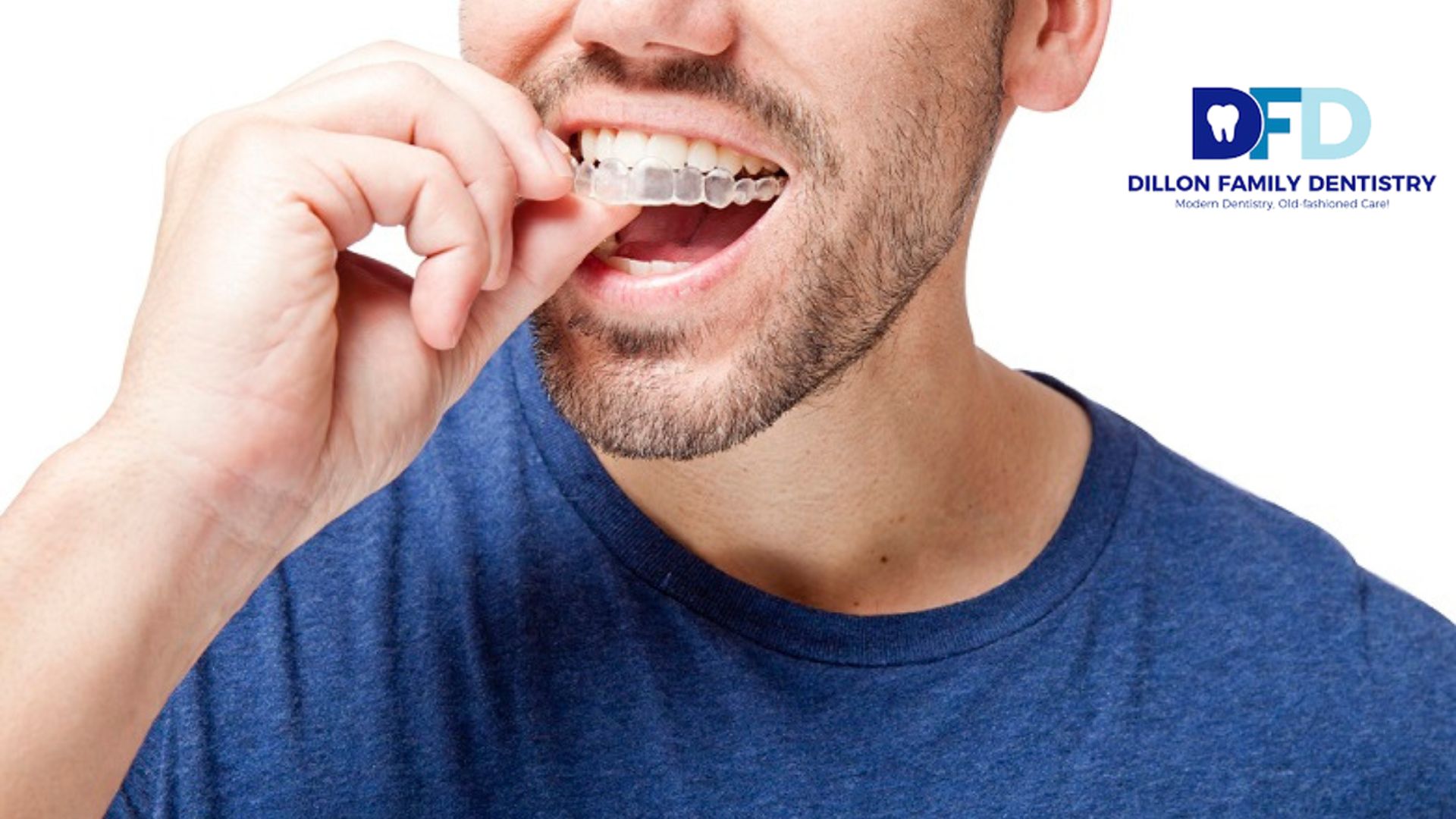
Teeth shifting after Invisalign is one of the most common post-treatment concerns we see at Dillon Family Dentistry in Bryn Mawr, PA. The good news: it is preventable and, in most cases, correctable. Consistent retainer wear is the single most important thing you can do to protect your Invisalign results long-term, and if shifting has already occurred, Invisalign refinement or touch-up treatment can restore your smile without starting over.
You did everything right. You wore your aligners for the prescribed 20 to 22 hours a day, attended every check-in appointment, and finished your Invisalign treatment with a smile you were proud to show off on Lancaster Avenue. Then, a few months later, you notice something is off. Your teeth do not look quite as straight. Your retainer feels tight, maybe too tight to insert comfortably. And you are wondering: why are my teeth shifting after Invisalign? At Dillon Family Dentistry in Bryn Mawr, PA, this is one of the most common concerns we hear from patients across the Main Line, and the good news is that we have real answers and real solutions.
Teeth shifting after Invisalign, known clinically as orthodontic relapse, does not mean your treatment failed. It means your teeth are doing what teeth naturally do: responding to the forces around them. Here is what you need to know, and what we can do about it right here in Bryn Mawr.
What Is Invisalign Relapse, and Why Does It Happen?
Orthodontic relapse is the term we use when teeth drift back toward their pre-treatment positions after an alignment procedure. It can happen after traditional braces or after Invisalign, and it is more common than most patients realize. Studies have shown that the majority of orthodontic patients experience at least some degree of relapse if they do not follow through on retainer use.
Here is the biology behind it. When your Invisalign aligners move your teeth, the surrounding bone and soft tissue, including your periodontal ligaments, do not immediately lock into place. Think of it like pressing a dent into clay: the clay holds the new shape only while you are applying pressure. Once treatment ends, your bite pressure, tongue pressure, and natural tissue memory begin to pull your teeth in directions that feel comfortable for your unique mouth anatomy. Without retainers actively resisting that movement, post-Invisalign teeth shifting is essentially inevitable.
At our Bryn Mawr practice, we see two patterns of relapse in patients who come to us for help:
- Short-term relapse: Teeth shift within the first 12 months after treatment, typically because retainers were not worn consistently or were lost.
- Long-term relapse: Gradual shifting occurring a year or more after treatment, influenced by natural aging, changes in the jawbone, or wisdom tooth pressure.
Both are treatable. And both are, to a large degree, preventable.
Why Are Your Teeth Not Staying Straight After Invisalign?
When patients ask me this question, I tell them there are usually a handful of root causes at work. Let me walk you through the most common ones we see here in Bryn Mawr and across the Main Line:
1. Inconsistent or Stopped Retainer Use
This is the number one cause. Retainers are not optional. After your final aligner, your teeth are still unstable in the jawbone. Your bone needs roughly 9 to 12 months to fully remodel and stabilize your teeth in their new positions. Skipping even a few nights a week during this window significantly increases your risk of relapse. If you have stopped wearing your retainer entirely, tooth movement is almost certain.
2. Worn or Damaged Retainers
Retainers do not last forever. With regular nightly use, a clear retainer typically lasts one to three years before the material degrades, warps, or cracks. A damaged retainer may still feel like it fits, but a compromised fit means it is no longer effectively holding your teeth in position. At Dillon Family Dentistry, we routinely check retainer fit during your regular appointments as part of our Invisalign aftercare in Bryn Mawr.
3. Wisdom Teeth and Natural Jaw Changes
Retainer compliance isn’t the only reason for shifting teeth. In most cases, the eruption of wisdom teeth during your late teenage through early adult years can force other adjacent teeth to shift into less than ideal positions. Furthermore, the continued growth of your lower jaw until you are in your later twenties can cause your lower incisors to become crowded into too small a space. The shifting that occurs due to these two phenomena is a normal anatomical change and is not a failure of treatment.
4. Teeth With High Relapse Tendencies
Some types of tooth movement are more likely to relapse than others after finishing treatment. Canines (and rotated teeth in general) have a strong tendency to return in the direction they came from because of their deep elastic memory. If you had severe rotations corrected during your Invisalign treatment, you should pay extra attention to your retainer wear and follow instructions precisely. The more complicated your original case was, the more supervision will be required following your treatment.
How to Keep Teeth Straight After Invisalign: What We Recommend
At Dillon Family Dentistry, our Invisalign aftercare in Bryn Mawr goes well beyond handing you a retainer and sending you home. Here is the practical guidance we give every patient completing treatment with us. You can also visit our Invisalign Treatment page for more on our full process.
- Use your retainer every night, forever! The process of moving teeth continues even after reaching adulthood. Using your retainer every night is the least dangerous form of treatment and is also the most cost-effective way to maintain the smile that took so many months to create.
- Replace your retainer according to schedule. Assess your retainer every 12 to 18 months, and if it feels loose, cracked, or otherwise different from how it fits right now, please contact us to replace it before any shifting of your teeth starts.
- Get routine check-ups at our Bryn Mawr office. Catching minor movement early allows for simple corrections, like a new retainer, rather than a full round of retreatment.
- If your retainer feels tight after a few nights off, re-insert it gently. Mild pressure usually means minor movement that can self-correct with consistent wear. Significant pain or inability to seat the retainer means it is time to call us.
- Avoid grinding (bruxism). Nighttime clenching and grinding exert significant force on your teeth and can accelerate shifting. If you grind, a custom nightguard alongside your retainer is worth discussing.
What If Your Teeth Have Already Shifted? Invisalign Refinement in Bryn Mawr
Here is what we tell patients who come to us after noticing post-Invisalign teeth shifting: it is rarely too late to correct. The solution depends on the extent of the movement. At Dillon Family Dentistry, we offer a range of family dental services and cosmetic treatments, including Invisalign refinement and touch-up options for patients experiencing relapse.
Option 1: New Retainer
If you’ve had a small shift in your teeth from the way they were previously, and your current retainer no longer fits, we can have a new retainer made for your new tooth position to keep your teeth from moving any further. The new retainer will not correct the movement; instead, it will retain what you have. Your retainer replacement can be done at the Bryn Mawr location.
Option 2: Invisalign Refinement Treatment
When your teeth have been moderately shifted from where they originally should have been, a new set of aligners from the Invisalign collection (often referred to as “refinements” or “touch-up” treatments) can help bring your teeth back into proper position. The good news is that refinements are usually completed in less time than the length of time it took for the initial Invisalign treatment. Your refinements may take you 3 to 6 months to complete.
Option 3: Full Invisalign Re-Treatment
If your teeth have had long-term significant relapse (in other words, they have moved back significantly since your previous Invisalign treatment was completed), it might be best to pursue a completely new treatment plan with Invisalign. This may seem intimidating; however, advancements in technology over the years have made this process easier and more precise than ever before, thanks to 3D digital planning.
Our first step will be to schedule a consultation where we can evaluate how your teeth currently look and relate these findings to your original treatment plan. We can then discuss all of your options for moving forward and give you an honest opinion regarding the benefits/limitations of each option.
Do I Need Retainers Forever After Invisalign?
This question is asked of me approximately weekly, and my response remains consistent: If you want your results to be permanent, then yes. Your teeth are never really still; over time, as you live, your bite will change, your jawbone will remodel, and forces of nature will continually act in the form of resistance against your teeth. For most patients, wearing a retainer at night while you sleep will be the only true way to keep your smile where it belongs instead of gradually drifting away.
By way of analogy, if you’ve taken months and spent real money to get a smile that not only looks great but also works correctly, wearing a retainer every night for a few hours is a very small investment in the protection of that investment. Patients who live in such areas as Ardmore, Haverford, Rosemont, and Wayne frequently come to see us for post-treatment compliance, knowing it doesn’t mark the end of their trip, but rather, only begins the maintenance portion of their experience.
If you are curious about cosmetic options to complement your straight smile, our teeth whitening in Bryn Mawr and dental veneers service pages explain what is available once your alignment is stable.
Invisalign Consultation in Bryn Mawr, PA: What to Expect
Whether you are concerned about shifting that has already happened or you want to establish a solid aftercare plan before problems start, the process at Dillon Family Dentistry is straightforward. Our consultations are designed to be educational, not high-pressure.
- We review your original Invisalign treatment records and compare them to your current bite.
- We assess retainer fit and identify whether your current retainer is still effective.
- We discuss your options clearly: new retainer, Invisalign refinement, or full re-treatment.
- We walk through realistic timelines and what to expect from each path.
As a family dentist serving the Bryn Mawr community and the wid