
Upper Wisdom Tooth Removal in Bryn Mawr, PA
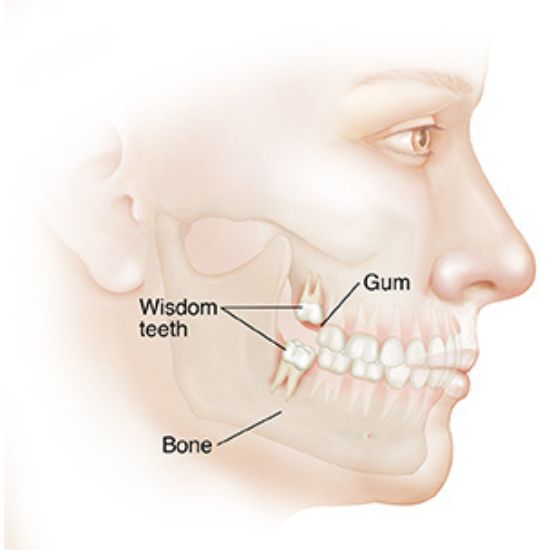
Dillon Family Dentistry specializes in providing patients with expert upper wisdom tooth extractions. Our office in Bryn Mawr serves the whole Main Line area, and we utilize advanced digital imaging and precision techniques to ensure a comfortable and safe experience during your upper wisdom tooth extraction procedure, as well as a quick recovery after your procedure. Whether you’re suffering from an upper wisdom tooth that’s given you pain or pressure, has become infected, or has become impacted and is causing you to suffer from pain, we can assist you typically on the same day you contact us for assistance.
If you wake up each day with jaw pain, tenderness in the roof of your mouth, or a continuous ache in your upper molar area, your upper wisdom teeth are most likely the cause of this discomfort. This is a common occurrence for our patients at our Bryn Mawr location, but we also understand that these symptoms do not have to continue. Patients come to us from throughout the Main Line, including Wayne, Haverford, Ardmore, Radnor, and Villanova, and our goal is to provide our patients with a simple, stress-free procedure from start to finish.
Dillon Family Dentistry provides expert wisdom tooth removal in Bryn Mawr, PA, serving the entire Main Line area. Our experienced team uses advanced imaging and sedation dentistry to make your extraction comfortable, safe, and recovery-friendly. Whether you’re dealing with pain, infection, or impacted wisdom teeth, we’re here to help, often the same day.
If you wake up with pain in your jaw, swollen gums, or persistent discomfort at the back of your mouth, it’s likely your wisdom teeth are to blame. Each week, we see this type of discomfort at Dillon Family Dentistry, located in Bryn Mawr, Pennsylvania, and there’s good news: you don’t have to make it last much longer than it already has!
We are a locally trusted dental practice that provides comprehensive care to patients from Bryn Mawr and the broader Main Line area, including Wayne, Haverford, Ardmore, Radnor, and Villanova. We can help you get through the process of having your wisdom teeth removed, whether they’re simply needing to be removed from your mouth or they are completely impacted, without any complications.
Upper Wisdom Tooth Pain? Get Relief Today
Gentle upper wisdom tooth removal with fast, comfortable care in Bryn Mawr.
What Is Upper Wisdom Tooth Removal?
The upper wisdom teeth (third molars) are the maxillary third molars that erupt, typically between the ages of 17 and 25 years old. With one on each side, they are located at the rear of the upper jaw.
However, many people’s upper jaws are too small to allow proper room for the molars; therefore, they frequently become “impacted,” remaining beneath the gums or protruding at an unusual angle. As a result, the adjacent teeth may also be pushed, leaving difficult-to-reach areas where bacteria can accumulate and leading to the development of infections that affect the mouth as well as other areas, such as the sinus cavities and other parts of the face.
Having an upper wisdom tooth removed is a routine procedure. Your upper wisdom tooth extraction will be completed the same day at our office in Bryn Mawr, Pennsylvania. Extractions from the upper jaw can typically be accomplished easier/faster than those of the lower jaw due to the fact that the bone structure of the upper jaw is less dense.
Signs You Need Upper Wisdom Tooth Removal
Common Symptoms We See in Bryn Mawr Patients
Upper wisdom tooth problems can present a little differently than lower wisdom tooth problems. Here’s what to watch for:
- Persistent pain or pressure at the back of the upper jaw, or near the cheekbone
- Swollen, red, or tender gums behind your upper second molars
- Sinus-like pressure, congestion, or facial aching with no clear nasal cause
- Difficulty opening your mouth fully or pain when biting down
- A bad taste or chronic bad breath that persists despite proper brushing and rinsing
- Visible swelling in the upper cheek or gumline area
- Crowding or shifting of your front or upper teeth
- Recurring headaches originating near the temples or upper jaw
- X-ray evidence of an impacted, sideways-growing, or fully submerged upper wisdom tooth
Upper wisdom teeth sit close to the maxillary sinus. An infected or impacted upper wisdom tooth can actually mimic sinus infection symptoms, such as pressure behind the eyes, cheek tenderness, and a stuffy feeling without any actual sinus problem. If you’ve been treating what seems like a chronic sinus issue and it’s not resolving, come see us. The culprit may be in your upper jaw, not your nose.
Don’t wait this out. Upper wisdom tooth infections can escalate and spread quickly. A planned procedure is always better than an emergency one.
Our Upper Wisdom Tooth Removal Process Step by Step
We think patients do better when they understand exactly what’s going to happen. Here’s a clear walkthrough of every step:
Step 1: Free Consultation and Digital X-Rays
Your first visit is a conversation. Dr. Dillon will listen to your symptoms, examine your upper back molars, and take digital X-rays or a Cone Beam CT scan (3D imaging) of the area. The 3D scan is particularly important for upper wisdom teeth because it lets us see the precise relationship between your tooth roots and the maxillary sinus floor, critical information for planning a safe, precise extraction.
Step 2: Local Anesthesia and Preparation
Before starting, we apply local anesthesia to numb the area. You won’t feel any pain, just occasional mild pressure while we loosen and pull out your tooth. This step is completed slowly so that each patient’s different anatomy is taken into consideration, and to ensure you are completely comfortable before proceeding. If you have any discomfort at any point, please let us know immediately so that we can address it.
Step 3: The Extraction Procedure
Extracting an upper third molar usually requires a small incision in the gum tissue above the tooth, carefully loosening it from the bone socket, and extracting it. On some occasions, when the tooth is tilted or embedded in the surrounding bone, we may need to break the tooth apart into several pieces before removing it. The upper jaw contains less bone than the lower jaw; therefore, the extraction process is often less complicated and faster than patients anticipate. Most extractions of upper third molars last approximately 15-40 minutes; all patients are pleasantly surprised by how easy and how fast they were able to complete an extraction procedure.
In the case of teeth that are next to the maxillary sinus, we use cone beam CT data and piezoelectric tools so that we can perform an extraction as accurately as possible, minimizing any chance of perforating the sinus.
Step 4: Recovery Instructions and Follow-Up
After the extraction, you’ll receive both written and verbal aftercare instructions covering what to eat, how to manage swelling, what to avoid, and specific precautions for upper wisdom teeth, including sinus-related guidance. We’ll also schedule your follow-up visit so we can monitor how you’re healing and answer any questions that come up at home.
Impacted Upper Wisdom Teeth: What You Need to Know
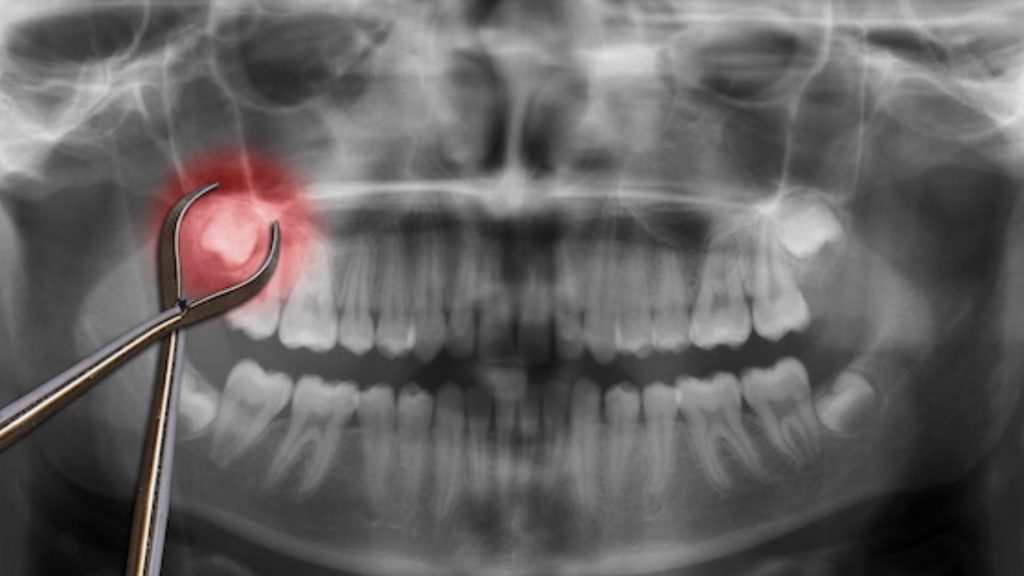
A wisdom tooth located in the upper right or left side of the mouth might not be able to function properly because it has been obstructed from coming through the gums. This happens for a variety of reasons, including not enough space for it to grow, growing at an angle, or being completely enveloped by bone. There are four different types of impacted wisdom teeth: mesial, vertical, horizontal, and distal. Each of these includes different levels of difficulty in removing the tooth.
When treating upper impacted wisdom teeth, it is critical that we assess their proximity to the maxillary sinuses. New research shows that the roots of some impacted upper wisdom teeth lie directly against or even within sinus cavities. Using our Cone Beam CT scans (which use X-ray