
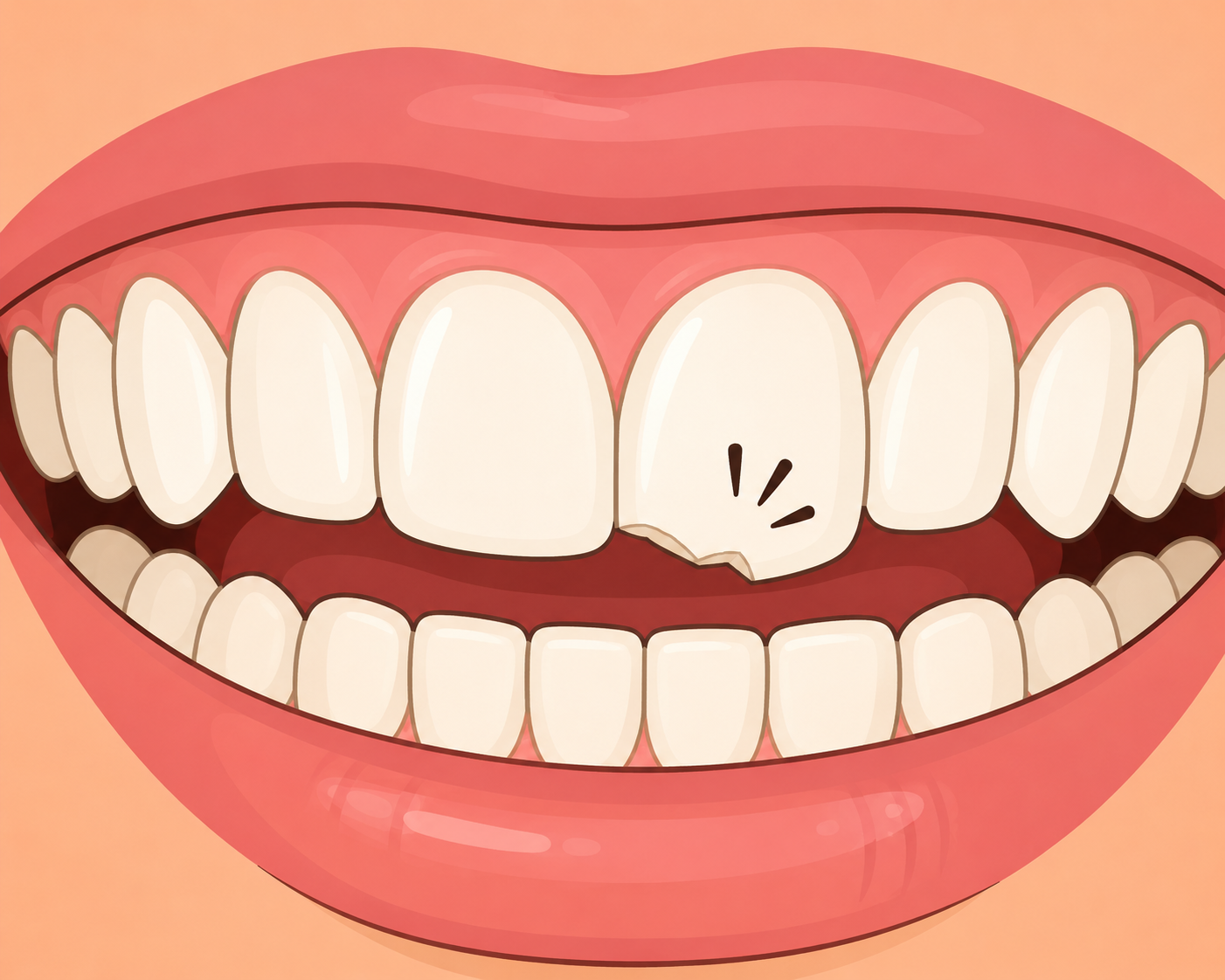
Cosmetic dentistry, including dental bonding, porcelain veneers, and professional whitening, can correct chipped, stained, and uneven teeth in most cases without orthodontic treatment. Dr. David Dillon of Dillon Family Dentistry in Bryn Mawr, PA, explains which option fits which problem, how long results last, and what to expect at a consultation.
Modern-day cosmetic dentistry refers to tooth bonding, porcelain veneers, teeth whitening, and the slight reshaping of the teeth. With this, we can thus treat stains, chip-offs, tooth gaps, and an irregular smile. The choice of treatment is based on the problem, number of teeth involved, and longevity of the solution. I will elaborate on each problem separately because cosmetic dentistry is not one treatment but a toolkit of various options.
My work as a cosmetic dentist in Bryn Mawr has taught me many lessons, and thus I have realized that patients want something simple and cheaper as compared to the full treatment plan. I know many patients who are just looking to make their damaged tooth or a stained tooth better without the need for a complete correction.
What Cosmetic Dentistry Can Fix
Cosmetic dentistry covers a wide range of concerns, and most of what patients bring into my office falls into a few common categories.
- Chipped or fractured teeth from a fall, a sports injury, or biting down on something hard.
- Stained or discolored teeth from coffee, wine, tobacco, certain medications, or simply age.
- Uneven, slightly crooked, or gapped teeth that don’t require full orthodontic treatment.
- Worn-down or short-looking teeth from years of grinding or general wear.
- Small teeth or an uneven gum line that throws off the balance of a smile.
What cosmetic dentistry generally can’t fix on its own is significant misalignment or bite problems, which usually call for orthodontic treatment like Invisalign first. I always evaluate bite and alignment before recommending a cosmetic fix, because covering up a bite problem with veneers alone tends to cause issues down the road.
How to Fix a Chipped Tooth Without Braces
One of the most frequent reasons that patients visit the dentist is to fix a chipped tooth, and happily, braces are rarely needed in these cases. In the case of a minor to medium-sized chip, the quickest and cheapest remedy is dental bonding. I place a tooth-colored resin onto the chipped spot and mold it into the correct shape, and finally harden it all during one visit of about one hour.
In case of a bigger chip or if the tooth has been chipped before, it is usually more reasonable to use a porcelain veneer. A veneer is less extensive since it is only a thin shell that covers the whole surface of the front part of the tooth. Thus, it not only repairs a chip but also prevents future chips as well. Nevertheless, veneers are more expensive than dental bonding and take more time to create, because they must be custom-made.
Best Treatment Options for Stained Teeth
There are generally two types of stains, and the treatment option will depend on the category of the stain. For instance, stains that occur on the surface of your teeth that come from coffee, tea, red wine, or tobacco can be successfully treated with professional teeth whitening, which has the power to brighten the shade of your teeth in one session. In-office whitening works effectively since it doesn’t alter teeth’ structure at all.
On the contrary, intrinsic stains, which can come from certain types of antibiotics taken at a young age, fluorosis, or a tooth that changed color due to an injury, may not be treatable with whitening options. However, there is something like porcelain veneers or bonding, which are based on covering the stain instead of whitening it.
It is crucial to talk about the type of stain when choosing the treatment, as applying teeth whitening unnecessarily may waste one’s time and money. As a rule, a quick examination of your oral cavity will help to make the right decision regarding a treatment.
How to Fix Uneven Teeth
Uneven teeth cover a lot of ground, from a single tooth that sits slightly forward or back to a smile where several teeth are different lengths or widths. For a single uneven tooth, dental bonding or minor enamel reshaping, sometimes called contouring, can often even things out in one appointment with no downtime.
To achieve more unevenness in several teeth, it makes sense to use porcelain veneers to achieve the best result. Porcelain veneers are made to fit your teeth perfectly, and thus, you can change the length, shape, and alignment of your teeth without even touching them. That is why this is the most noticeable difference for the patients, as even several millimeters of difference in the length of teeth from the front side will be seen easily, despite the fact that describing that is really difficult.
Veneers vs. Dental Bonding: Which Is Right for You?
This is one of the most common questions I get, and the honest answer is that it depends on your goals, timeline, and budget.
Dental bonding is the quickest, least costly, and entirely reversible in that no enamel is removed. It is usually indicated for small chips, minute spaces, or slight color correction and normally requires only one appointment. The catch, however, is with the inability of the bonding to resist stains or also not be as durable as porcelain; thus, patients will need their bonding touched up after five to ten years, depending on how well the bonding holds up.
Porcelain veneers will require some ruthless, irreversible enamel removal to fit in the shell; thus, this spans two visits. In return, the veneers will now be more stain-resistant than the bonding, keep the shape and color for a longer duration of time, and when there is a need to cover several teeth at once, they tend to look more uniform. These make them a better investment in the long run if the patient is concerned with more serious chips, deeper stains, or uneven teeth.
Neither option is universally “better.” I walk every patient through both during a consultation, using photos and sometimes a simple mock-up, so you can see roughly what to expect before committing to either one.
What a Smile Makeover Looks Like at Our Bryn Mawr Office
A smile makeover doesn’t equal twenty new veneers. It usually involves different dental procedures meant to fix the teeth that bother the person most-in most cases, that would be the four to eight teeth visible when you smile. Veneers and bonding can work well, coupled with whitening of the adjacent teeth, to create a makeover that looks more natural.
I keep this process conservative by design. My goal is a smile that looks like a great natural version of your own, not a different smile altogether. That approach tends to age better, cost less, and require less maintenance than a more dramatic full mouth transformation.
Choosing a Cosmetic Dentist in Bryn Mawr and the Main Line
When considering cosmetic dentists in different areas of the Main Line, such as Haverford, Wayne, Ardmore, Villanova, and Radnor, it is essential to ask specific questions before making a decision. For instance, look at before-and-after photos from past patients with a similar problem as yours, not just an “extreme makeover” treatment. Find out whether the dentist does all the veneer or bonding work on site or takes the procedure to an external laboratory, as this makes a difference in turnaround time and shade/shape. Lastly, it is essential to find out how the dentist takes care of bite and alignment in the context of your cosmetic procedure, since the cosmetic problem would most likely be resolved without taking the bite into account.
The philosophy behind my practice here in Bryn Mawr is the very philosophy based on the specific points mentioned above, since I help my clients get a natural and conservative solution instead of a bold “makeover.”
How Long Do Cosmetic Dentistry Results Last?
It’s important to talk about longevity since it greatly impacts which one a person should choose. Teeth whitening normally lasts from six months up to two years before a new treatment is required. Dental bonding lasts five to ten years; however, it may get chipped or stained again due to the fact that it is more vulnerable than porcelain. Finally, porcelain veneers represent the most durable option, lasting from ten to fifteen years or even longer if properly taken care of.
None of these treatments is entirely “set it and forget it.” Regular brushing, flossing, and checkups matter just as much after cosmetic work as before it, and I always build a maintenance plan into the conversation so you know what to expect years down the road, not just on the day you leave the office.
What to Expect at Your First Visit
If it is your first visit with us, then you can expect the same standard procedure that applies to each patient visiting for a first cosmetic consultation. During the appointment, our dentists will check your damaged teeth, evaluate your bite, and listen to you to understand your goals and expectations. After that, we will prepare a plan of action for you. Some of our patients are immediately open to the idea of receiving treatment, while others choose to take their time, which is fine.
We are now welcoming new patients to our Bryn Mawr office. This includes families and people from the Main Line seeking cosmetic dentist services with conservative treatments.
Getting Started: Your Cosmetic Dentistry Consultation
The best next step is a straightforward consultation. We’ll look at the specific teeth that bother you, talk through whether bonding, veneers, whitening, or some combination makes the most sense, and give you a clear cost estimate before any work begins. If you have dental insurance, we’ll check what applies toward cosmetic treatment, and we also offer flexible financing for patients who’d rather spread out the cost.
If a chipped, stained, or uneven tooth has been bothering you, you don’t need to live with it or assume the fix will be complicated. In most cases, it’s a lot more straightforward and a lot more affordable than people expect. Learn more about our ap