
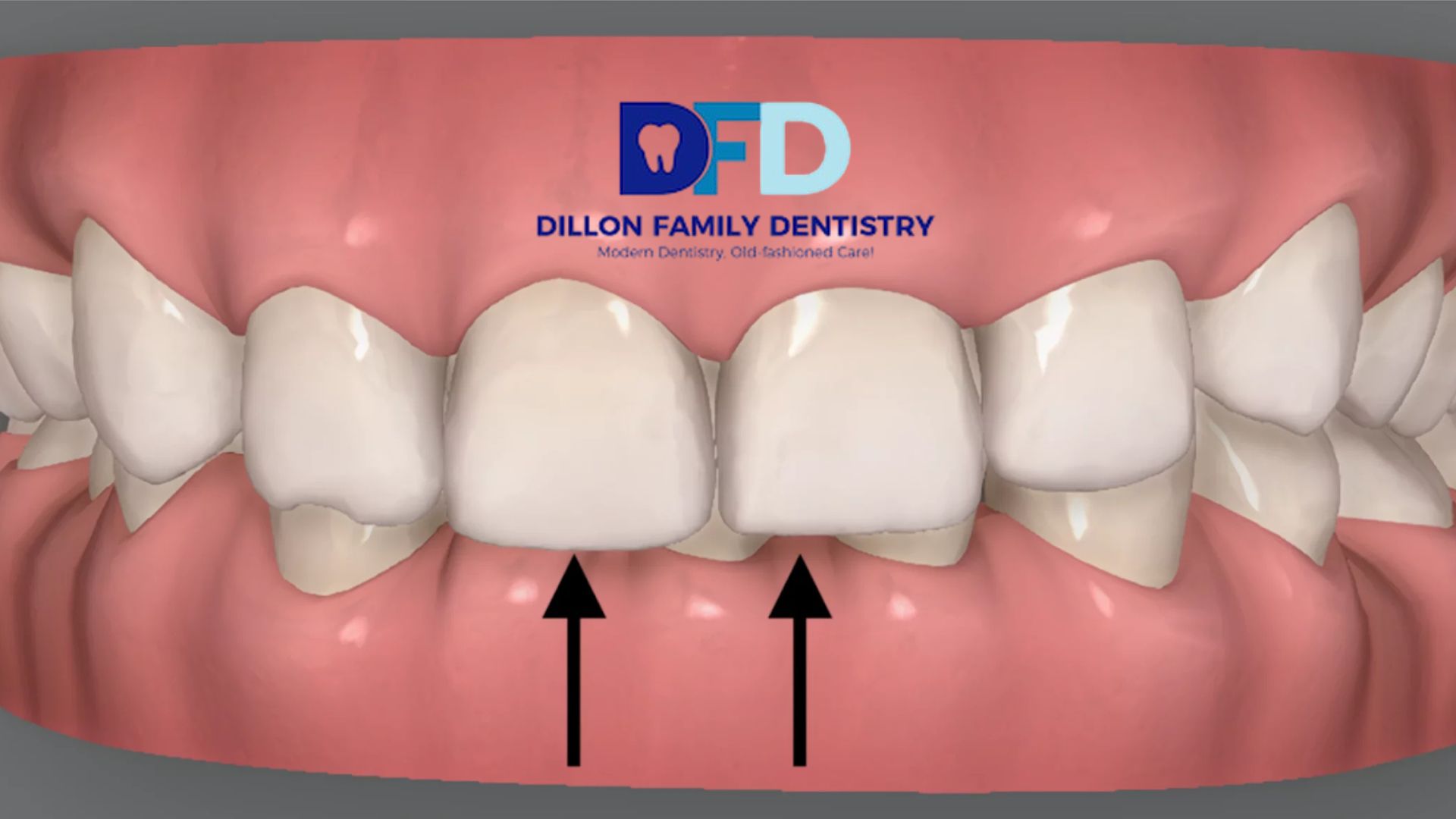
Actually, most of the time that we are presenting orthodontic treatment for our patients it is stemming more from optimal dental health, rather than esthetics. This is consistent with our no-pressure environment. We figure that if someone wants to improve their smile, they will tell us. The problem is when they don’t realize that they are not keeping their mouths in the most healthy configuration, and that’s where they need advice they can trust!
When most people think about Invisalign, they picture straightening crooked teeth with clear, removable aligners. But what many don’t realize is that main line Invisalign orthodontics specialists can address much more than just cosmetic concerns. If you’re dealing with bite issues like overbite, underbite, or crossbite, you might be wondering: Can Invisalign actually fix these problems, or are traditional braces your only option?
The answer might surprise you. Modern Invisalign treatments have evolved significantly, and it’s now capable of correcting various orthodontic issues beyond simple tooth alignment. Let’s explore what Invisalign can and cannot do for your bite.
Bite Problems vs. Crooked Teeth
To fully understand how effective Invisalign is, it’s important to differentiate between alignment issues and bite problems.
Crooked or misaligned teeth are primarily a cosmetic concern. They can affect your confidence when smiling and may also make proper oral hygiene more difficult.
Bite problems (malocclusions), on the other hand, involve how your upper and lower teeth come together when you close your mouth. Common bite issues include:
- Overbite: Upper teeth extend too far over lower teeth
- Underbite: Lower teeth protrude past upper teeth
- Crossbite: Some upper teeth sit inside lower teeth when biting
- Open bite: Front teeth don’t touch when back teeth are closed
Unlike cosmetic alignment concerns, bite problems can lead to jaw pain, difficulty chewing, speech issues, and increased wear on your teeth if left untreated.
What Bite Issues Can Invisalign Fix?
Modern orthodontic teeth straightening with Invisalign has been shown to be effective in treating mild to moderate bite problems. Below are bite issues that can often be treated using Invisalign:
- Treats mild to moderate overbites
Invisalign can be effective in treating overbites by applying controlled, strategic pressure to guide teeth into proper alignment. This is achieved with the help of small, tooth-coloured attachments placed on the teeth. For many patients in Bryn Mawr, Invisalign provides a virtually invisible form of treatment compared to that of metal braces.
- Treats minor underbites
The treatment of even a mild underbite will generally respond well to Invisalign; however, if you are suffering from a severe underbite, you will most likely require some form of orthodontic intervention (surgery). In this case, Invisalign is used to reposition the lower jaw and teeth into a proper alignment.
- Crossbite correction
If more than one tooth is affected by a crossbite, custom-made aligners can be used to widen the upper arch and reposition the teeth, helping to correct the crossbite.
- Treats open bite
Many of the open bite cases, particularly those caused by either thumb sucking or tongue thrusting habits, are effectively treated with Invisalign. The treatment process slowly moves your front teeth together until they touch.
- Gap closures/spacing problems
In addition to bite problems, Invisalign closes gaps between teeth and fixes any spacing issues affecting your bite pattern.
Invisalign vs Braces: Which Is Better for Bite Correction?
When comparing Invisalign vs. braces for bite correction, both have their advantages. Here’s how they stack up:
Invisalign Advantages:
- Nearly invisible appearance
- Removable for eating and cleaning
- Fewer office visits required
- More comfortable with no metal brackets
- Easier to maintain oral hygiene
- Advanced 3D treatment planning
Traditional Braces Advantages:
- Can handle more severe bite problems
- More precise control for complex movements
- Cannot be removed (ensures compliance)
- Sometimes faster for severe cases
Effective and Efficient Orthodontic Treatment: Most orthodontic patients today will find the ideal balance of results with ease of use with Invisalign. However, in order to achieve this, an adequate assessment by qualified Invisalign Providers in Bryn Mawr is essential for determining the patient’s individual needs.
The Invisalign Treatment Process for Bite Correction
If you’re thinking of using Invisalign in Bryn Mawr for bite malocclusions, there are some things you can expect from beginning to end:
- Your 1st step is to find a dentist’s office, like Dillon Family Dentistry, that will perform a comprehensive evaluation of your mouth, including an examination of all of your teeth, x-rays, and a digital scan of your mouth to help the orthodontist create a 3D model of your teeth.
- Your orthodontist will create a customized treatment plan that maps out how your teeth will move with each set of aligners over the course of your treatment. You’ll also be able to see a virtual preview of your smile before treatment even begins.
- You will receive several custom-designed clear plastic aligners, created specifically for you, to wear during your treatment. You will wear each aligner set for approximately 1 to 2 weeks, depending on how quickly your teeth move, until you reach the end of your series.
- In order to achieve optimal results with clear aligners, you must wear them 20-22 hours each day, and remove them for three things: eating, drinking anything but water, and maintaining proper oral hygiene.
- During the treatment phase (the 1st half of your Invisalign treatment), your doctor will schedule you for regular follow-up appointments every 6-8 weeks. These appointments are typically shorter than those for traditional braces, as fewer in-office adjustments are needed throughout your treatment.
At the end of your active treatment phase (the 2nd half of your Invisalign treatment), the doctor will provide you with a “retainer” so that you can maintain your results. Both Invisalign retainers and other types of retainers are essential for preventing your teeth from shifting back after the active phase of treatment.
How Long Does Invisalign Take to Fix Bite Problems?
Treatment duration varies based on the severity of your bite issue:
- Minor corrections: 4-6 months
- Moderate bite problems: 6-18 months
- Complex cases: 18-24 months or more
Your specific timeline depends on factors like your age, the complexity of your bite problem, and how consistently you wear your aligners.