
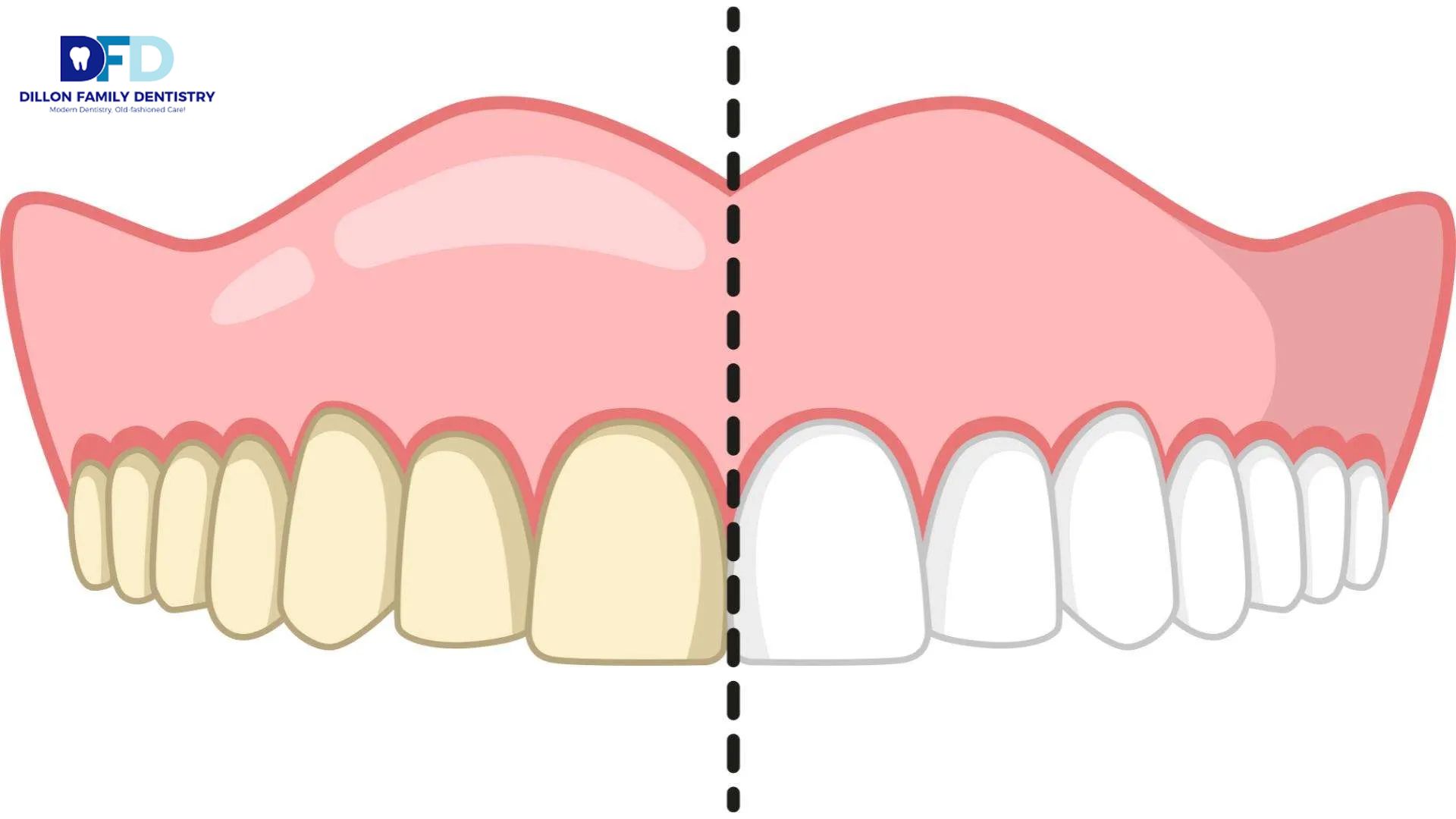
Teeth whitening sensitivity is a temporary side effect, not a permanent condition. It typically resolves within 1 to 4 days as your enamel remineralizes and the tooth’s nerve endings settle down. Professional whitening in Bryn Mawr, done under a dentist’s supervision with custom trays and a controlled gel strength, carries a much lower risk of lasting sensitivity than store-bought kits used without any guidance.
I receive this inquiry almost every week in my Bryn Mawr office, typically right before couples go through with their nuptial vows, or before major business interviews or reunions that one has been eagerly awaiting to experience. The question is: “If I whiten my teeth, will I have sensitive teeth forever?” This question is appropriately posed to me ahead of time rather than after I become a patient.
No, the vast majority of my patients do not experience permanent sensitivity because of teeth whitening procedures done professionally by dentists. Typically, the sensation of mild sensitivity (“zinger”) will occur within the first couple of days of either in-office or at-home teeth whitening treatment and will go away within 24 to 96 hours. A professionally performed teeth whitening procedure under a dentist’s supervision in Bryn Mawr has much less chance of creating ongoing sensitivity than using a do-it-yourself kit purchased at your local pharmacy on your own kitchen counter, without the dentist checking your enamel first.
After more than 30 years practicing on the Main Line, I’ve walked hundreds of patients through exactly this concern. So let’s break down why sensitivity happens, how long it should realistically stick around, and what separates a whitening treatment that leaves you glowing from one that leaves you wincing every time you sip your morning coffee.
What’s Actually Happening to Your Teeth When They Whiten
Your enamel can be thought of as a wall that is covered with millions of tiny holes. When you use a whitening product, hydrogen or carbamide peroxide, the active ingredient of that product passes through these microscopic holes and then into the dentin below that, where the nerve endings located in the tooth are found. This is the part of the enamel that actually does the work of removing all the coffee, tea, red wine, or normal aging stains that have built up for many years.
When the peroxide reaches those nerve endings, your tooth reacts the same way any part of your body reacts to a new sensation: with a short burst of inflammation. It’s your nerve saying “hey, something’s happening here,” not your tooth sounding an alarm that damage is underway. That inflammation is exactly what produces the tingling, and for almost everyone, it settles down within a couple of days as the enamel closes back up and remineralizes.
Each person’s experience is unique; for example, I have many patients who describe their experience as feeling a minor tingling sensation, but others have experienced a very intense pain, like a very sharp and sudden zinger, when walking from outside in the cold into a warm building (like entering the Bryn Mawr Film Institute after it got cold outside). If you have thinning enamel or some gum loss, you will typically experience more of it than someone with thicker and healthier enamel.
Is Teeth Whitening Sensitivity Permanent?
For the overwhelming majority of patients, no. The sensitivity you feel is a temporary nerve response, not a sign that whitening has damaged the tooth structure itself. Once the dentinal tubules close back up and your enamel remineralizes with the help of your saliva, the sensitivity resolves completely, and your teeth go right back to feeling normal.
I’ll tell you the truth: in certain cases, when someone says they have “permanent whitening sensitivity” after finishing the whitening process, it could be caused by something other than the whitening process itself and might have been brought out due to the fact that this person had the whitening performed on them. An example of this would be having a small cavity, a cracked filling, exposed roots from gum recession, or inflammatory nerve damage caused by eating damaged food. These types of conditions will continue to exist even after the whitening is done, so it’s important for me to do an initial exam on my patients prior to starting any type of whitening so that I am able to determine if they have a dental concern and provide appropriate care. I would rather my patient doesn’t blame their whitening for something it didn’t create.
How Long Does Tooth Sensitivity Last After Whitening?
Most of my patients feel completely normal within 48 hours. Here’s the general timeline I share in consultations:
- 24 to 48 hours: typical resolution window for professional in-office or take-home tray whitening
- Up to 4 days: still within the normal range, especially after a stronger professional-strength treatment
- 5 to 7 days: less common, usually tied to over-applying an over-the-counter product or whitening too frequently without spacing out sessions
- Beyond a week: worth a call to your dentist, since this points toward something other than routine whitening sensitivity
Clinical research backs this up. Studies on both professional and over-the-counter bleaching systems consistently show that roughly one third to two thirds of users report mild to moderate sensitivity during treatment, with the sensation resolving once treatment stops. There’s no credible published research showing that properly used whitening treatments cause permanent nerve or enamel damage.
What the Research Actually Says About Whitening Sensitivity
My belief in this saying is not only based on my 30 years of experience in the dental chair but is backed by the clinical evidence. Numerous clinical studies (reviewed in many different dental journals) have reported that there is a range from one-third to two-thirds of patients experiencing temporary tooth sensitivity depending on the concentration of bleach and duration of application of the bleaching agent with either professional or over-the-counter materials. However, I can find no documented cases from any of these studies of nerve or enamel damage due to appropriate use of any whitening procedures on teeth.
What the data does show is that concentration and contact time matter far more than most people realize. Higher-concentration professional gels applied for a controlled, shorter window tend to produce less lingering sensitivity than lower-concentration drugstore products left on for extended periods without supervision. That’s the opposite of what most patients assume, and it’s exactly why I walk every whitening patient through a plan built around their specific enamel and gum health rather than handing them a generic tray and wishing them luck.
Professional Teeth Whitening vs. Over-the-Counter Kits: Which Is Safer for Sensitive Teeth?
This is the area where there is a noticeable difference between the two services. My office provides a professional tooth whitening service in Bryn Mawr, whereby we take precise impressions of your mouth to create individualized trays for each patient. This allows us to apply whitening gel only onto the teeth of the individual receiving a professional teeth whitening service at a concentration that we the dentist control for as long as we feel is necessary for the patient receiving the teeth whitening treatment.
Because over-the-counter products are mass-produced for a general population, the amount of whitening gel that gets applied to the gum tissue of the patient receiving over-the-counter products is much greater than what would occur if the patient was receiving a professional teeth whitening service from a dentist. This is one of the primary reasons why patients who utilize over-the-counter whitening products tend to experience more gum irritation and greater periods of tooth sensitivity than those who receive a professional tooth whitening treatment.
At Dillon Family Dentistry, we offer Zoom in-office whitening for patients who want dramatic results in a single visit, along with custom take-home trays for patients who prefer a gradual approach they can manage from home. Either way, you’re getting a treatment plan built around your teeth, not a one-size-fits-all box off a shelf.
Does Teeth Whitening Damage Enamel?
No, not when it’s done correctly. The whitening process temporarily draws a small amount of mineral out of your enamel, which is what makes your teeth feel a little more porous and sensitive for a day or two. That mineral loss is reversible. Your saliva naturally redeposits calcium and phosphate back into the enamel over the following days, restoring it to full strength.
I have noticed a lot of problems with patients who take too much high concentration bleaching products, being guided by professionals, whitening too often and leaving bleaching strips on longer than specifically indicated. When using these products incorrectly can produce prolonged demineralisation of the enamel and/or irritation to the gingiva (gum tissue). Using a whitening product without having a dentist evaluate your brotox (enamel) health, gingival (gum) health, and existing restoration will put your oral health at risk.
I have had many patients find themselves in my Bryn Mawr practice after spending all summer using whitening strips they purchased over the counter, and they believe that they will never get their teeth back to being WHITE, when in reality they just need to take a break, get a fluoride treatment, and have a good exam. The vast majority of the time, the teeth would rebound to WHITER as soon as I placed them on a controlled whitening regimen.
How to Reduce Tooth Sensitivity After Whitening: My Playbook for Bryn Mawr Patients
If you want a bright smile without the discomfort, here’s what I recommend to patients before and after treatment:
- Use a desensitizing toothpaste with potassium nitrate for about a week before and after your whitening appointment
- Skip extremely hot or cold food and drinks for the first 48 hours after treatment
- Ask about a fluoride or prescription-strength desensitizing gel applied right after your session
- Space out whitening sessions instead of whitening every