
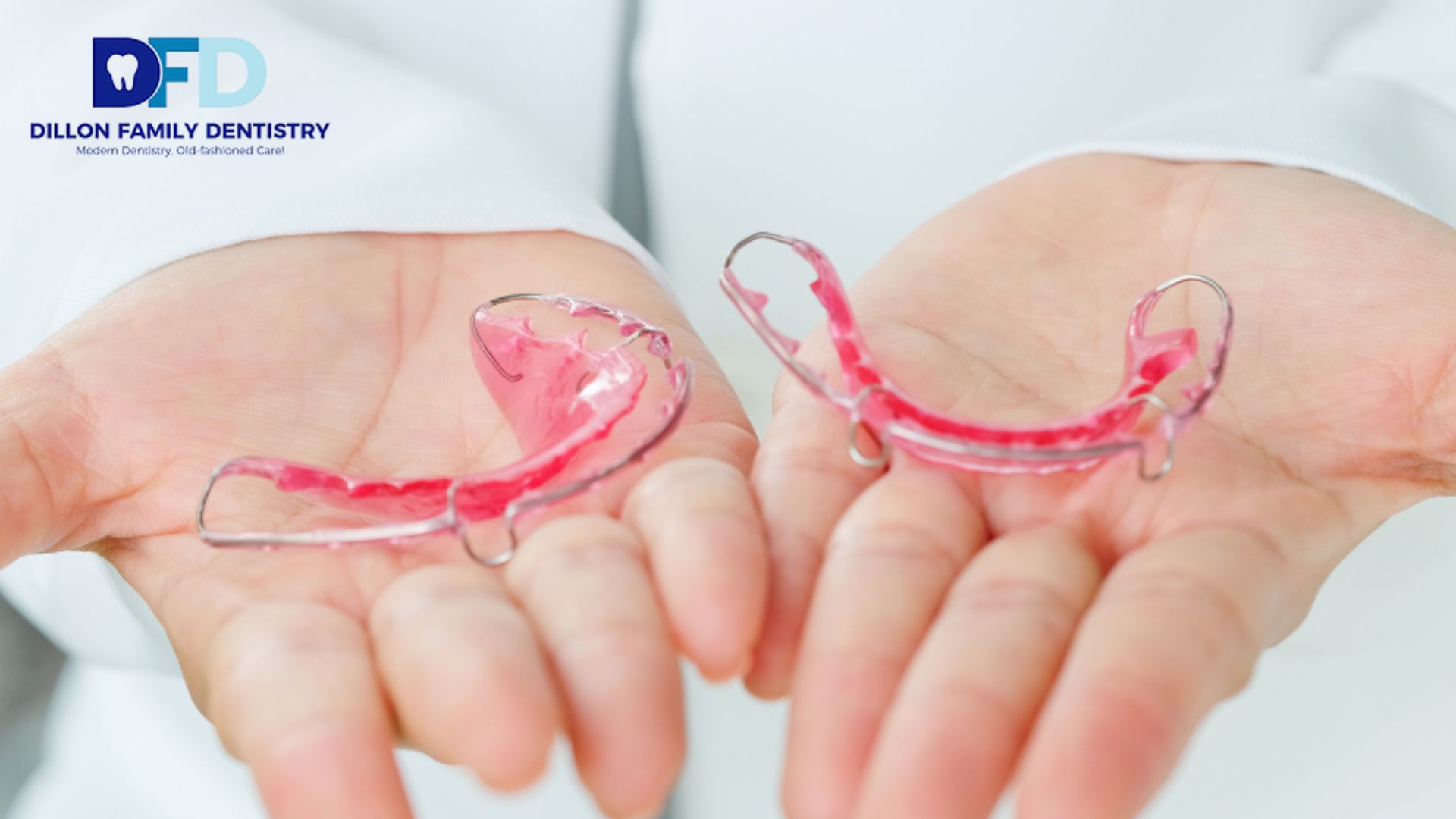
Dillon Family Dentistry in Bryn Mawr, PA, answers a question every Invisalign patient on the Main Line eventually asks: how do you actually speed up your results? The short answer is compliance. Wearing your aligners 20 to 22 hours daily, changing trays on schedule, using chewies to seat aligners fully, and attending every check-in appointment are the controllable factors that determine whether your Invisalign treatment finishes on time or runs months longer than planned. Dr. David Dillon shares the practical, patient-tested tips that keep clear aligner treatment on the fast track.
The patients who finish Invisalign orthodontics on the Main Line on schedule, or even a little ahead of it, are the ones who understand that the aligner system is doing exactly what it’s designed to do. Their job is to keep out of its way and give it every advantage they can.
In this article, I’ll go over how to accelerate the speed of your Invisalign treatment. There are things that I tell all my patients on Day 1, and then there are mistakes that I commonly see that affect the overall speed of an otherwise well-structured treatment plan. Anyway, whether you are in Bryn Mawr, Haverford, Rosemont, or any location along the Main Line and want faster results from your Invisalign, these are the things that will help you get there.
Why Invisalign Compliance Is the Only Real Shortcut
Before I get into specific tips, please understand: Invisalign actively moves your teeth by applying a consistent, measured, and gradual force on your teeth to cause movement. By removing the trays, this force is also removed. If the force is removed too frequently or for a long period, your teeth will drift back at least slightly, and your next set of trays won’t fit well. Trays that don’t fit properly will not move your teeth as they are intended to. It is a high probability that most Invisalign treatment extensions occur because of non-compliance, not due to treatment complexity or biology. The Invisalign system is designed with a specific wear schedule; deviating from this schedule is the best way to cause your treatment to take longer than necessary. Everything else I will recommend to you is built on that fact.
The Invisalign 22-Hour Rule: What It Actually Means
The minimum wear duration is twenty hours; the maximum is twenty-two hours; therefore, aim for a daily average of twenty-two hours. If you wear your aligners less than twenty hours daily, I feel that indicates a need for some adjustment, and we will address that.
In fact, you will need to remove your aligners to eat and drink anything that is not water, as well as when brushing and flossing your teeth. Other than these occasions, you should be wearing your aligners, regardless of whether you are in public or otherwise (e.g., during a meeting, while dining with friends, exercising, etc.). If you have discomfort wearing your aligners when in public, you are on the correct path to achieving your desired smile. Overall, the best approach to using your aligners is simply to place them back into your mouth after every removal; do not leave them out for longer than necessary.
A common patient mistake is looking at a two-hour removal window and treating it as a budget they can spend across the day in small increments. A 15-minute coffee here, a snack there, a longer lunch. Before they realize it, the aligners have been out for four hours. That happens every day for a week, and suddenly a two-week tray becomes a three-week tray because the teeth haven’t fully tracked.
Set a timer. Use a tracking app. Do whatever it takes to protect those 22 hours, especially for the first 48 hours after switching to a new set of trays, when the pressure and movement are most active.
Use Chewies Every Time You Put Your Aligners Back In
If you haven’t heard of Invisalign chewies, your treatment is probably moving more slowly than it needs to. Chewies are small, soft, cylindrical tools, about the size of a cotton roll, that you bite down on for five to ten minutes after inserting a new tray. They help push air pockets out from between the aligner and your tooth surface, so the tray seats flush against every tooth.
It’s important because if there’s an air gap between an aligner and tooth, then less pressure will be applied to that tooth and because the aligner will not be able to move (realign) that tooth properly within the two-week period for each tray, the tooth will end up in about the right place, but not exactly in the correct position when the next aligner is inserted, at which time it will also be a little misaligned. Chewy aligners will help keep the right amount of pressure being applied to each tooth and will therefore prevent this from happening.
I recommend using them in the morning, evening, and every time you reinsert your trays after eating. It adds maybe five minutes to your daily routine and meaningfully improves how well your treatment tracks.
Stick to Your Tray Change Schedule and Do Not Skip Ahead
Occasionally, a patient will decide to switch to their next set of aligners earlier than recommended. I completely understand their thinking. If an aligner is feeling loose after 10 days, then surely their teeth have moved into place?
This may not be the case. Each aligner in the series has been created to create a specific amount of movement within the teeth. If you switch to the new aligner too early, then your teeth will not have completed all the movements required by the previous aligner; therefore, the new aligner will require corrections due to having a less-than-perfect background to create the new movements with the new aligner. This causes multiple problems in fitting and tracking of the teeth and usually will require additional refinements or aligners to fix those tracking issues. So, switching aligners early to expedite treatment often causes you to be in treatment longer than expected.
On the flip side, wearing a tray longer than prescribed doesn’t help either. The tray applies its designed pressure during the first week to ten days. After that, wearing it longer just maintains the position; it doesn’t accelerate the next movement.
Follow the schedule. If you have questions about whether a tray has done its job, call us, and we will tell you. Do not make that call on your own.
What Slows Down Invisalign Results? Common Pitfalls on the Main Line
In my experience treating Invisalign patients in Bryn Mawr and across the Main Line, the issues that slow treatment down are almost always the same:
- Inconsistent wear time. Anything under 20 hours daily. The aligners cannot do their job when they are sitting in a case.
- Hot beverages with trays in. Heat warps the plastic, which changes the fit and changes how the aligner contacts your teeth. Coffee and tea come out before anything else.
- Poor oral hygiene. Inflammation in the gums and early gum disease can slow tooth movement because the body prioritizes healing over the bone remodeling that Invisalign depends on. Brush after every meal before reinserting your trays.
- Skipping check-in appointments. We do not schedule these visits to check boxes. At every six-to-eight-week appointment, I am looking for tracking issues, verifying movement, and making adjustments to keep the plan on course. A missed appointment is a missed opportunity to catch a small problem before it becomes a big delay.
- Not using attachments as directed. Some Invisalign cases include small tooth-colored attachments bonded to specific teeth to give the aligner additional grip for complex movements. If an attachment breaks and you wait two weeks to call us about it, those two weeks of movement may be compromised.
My Invisalign Trays Are Not Fitting Properly: What Should I Do?
This is a key question I want all of my patients to ask early and often. If you have placed a new tray and it appears to be much tighter than you expected, or if you find that the tray does not fit down on the teeth completely, do not wait for two weeks for it to get better before you call the office.
A poorly-fitting tray is indicative of teeth that have not tracked into the position where the previous tray was supposed to move them. Continuing to wear a new tray with a tracking issue only makes a bigger problem. The sooner we catch it, the smaller the correction will be.
Most minor seating issues can be corrected with chewies, but if, after using a chewie consistently for 2 – 3 days, the tray still does not fit correctly, it is a clinical issue and not a patient issue. You should call Dillon Family Dentistry so that we can evaluate the current status of your current trays.
What Are Invisalign Refinement Trays, and Can You Avoid Needing Them?
Refinement trays are an additional set of aligners created after your initial series completes, used to finish any tooth movements that didn’t fully track. They’re common, they’re not a failure, and in some complex cases, they’re simply part of the plan from the beginning.
In order to lower the chance of having to have refinements performed, it is best to follow the guidelines outlined in this blog post to help accomplish this goal. Parameters include 22 hours of daily wear, use of chewies, maintaining good oral hygiene, and attending all scheduled check-in appointments. A patient who follows these guidelines should experience fewer tracking issues as they progress through their aligner series.
If you do need refinements, we handle them right here at our Bryn Mawr office. No need to start over from scratch or work with a new provider. We assess what’s needed, work with Invisalign on the revised plan, and get you back on track.
Invisalign Orthodontics on the Main Line: What Dillon Family Dentistry Does Differently
One way that our practice differs is that we view Invisalign as a component of the entire smile plan rather than as an isolated product. In my experience, a little work, a little dental bonding in the right spot, can really simplify the case and often cut down the number of trays. That is the sort of thinking that a general and restorative practice can offer that an orthodontic office by itself cannot.
We have the ability to formally outline every treatment plan via 3D digital imaging before a single tray is ever ordered. You’re able to see where you