A sudden broken tooth can be frightening and painful. Whether you’ve bitten into something hard, experienced a sports injury, or simply discovered a crack, knowing what to do in those crucial first moments can make the difference between saving your tooth and needing more extensive treatment. At Dillon Family Dentistry in Bryn Mawr, PA, we understand that dental emergencies don’t follow a schedule, and we’re here to guide you through every step of managing a broken tooth emergency.
Why Teeth Break
Teeth are remarkably strong, but they’re not indestructible. Several factors can lead to a sudden break or crack:
Common causes include:
- Biting down on hard foods like ice, nuts, or hard candy
- Sports-related injuries without proper mouth protection
- Untreated cavities that weaken tooth structure (#1 reason)
- Large old fillings that compromise tooth integrity
- Teeth grinding (bruxism) that weakens enamel over time
- Sudden temperature changes in the mouth
- Facial trauma from accidents or falls
Understanding the cause helps prevent future incidents and guides your dental trauma care approach.
Immediate Steps: What to Do Right After Your Tooth Breaks
When you realize your tooth has broken, staying calm and acting quickly is essential. Here’s your step-by-step action plan:
Within the First 5 Minutes
- Rinse your mouth gently with warm water to clean the area and assess the damage. This helps you see the extent of the break and remove any loose fragments.
- Save any broken pieces if possible. Place them in a clean container with milk or your own saliva. These fragments can sometimes be reattached by your dentist.
- Control bleeding by applying gentle pressure with clean gauze or a damp tea bag. Most bleeding from a broken tooth should stop within 10-15 minutes.
Managing Pain and Swelling
- Apply a cold compress to the outside of your cheek near the broken tooth. This reduces swelling and numbs the area, providing temporary relief. Apply for 15 minutes at a time with 15-minute breaks.
- Take over-the-counter pain medication like ibuprofen or acetaminophen according to package directions. Avoid aspirin, which can increase bleeding.
- Cover sharp edges with dental wax, sugar-free gum, or even a small piece of gauze to protect your tongue and cheeks from cuts.
When to Seek an Emergency Dental Visit
Not all broken teeth require immediate emergency care, but many do. Here’s how to assess the urgency:
Seek Immediate Care If You Experience:
- Severe pain that doesn’t respond to over-the-counter medication
- Heavy bleeding that won’t stop after 15 minutes
- A tooth broken at or below the gum line
- Visible pulp (the soft inner tissue of your tooth)
- Facial swelling or signs of infection
- Difficulty breathing or swallowing
- A completely knocked-out tooth
Contact an urgent dentist in Bryn Mawr immediately if you experience any of these symptoms. At Dillon Family Dentistry, we prioritize dental emergencies and see patients experiencing dental trauma as quickly as possible.
Schedule an Appointment Soon If:
- You have a small chip with no pain
- The break is minor but has a rough edge
- You have mild sensitivity to hot or cold
- The tooth is cracked, but not causing severe discomfort
Even minor breaks need professional evaluation to prevent complications.
Types of Broken Teeth and Their Treatments
The type of break determines your cracked tooth treatment options. Here’s what you need to know:
- Minor Chips and Cracks
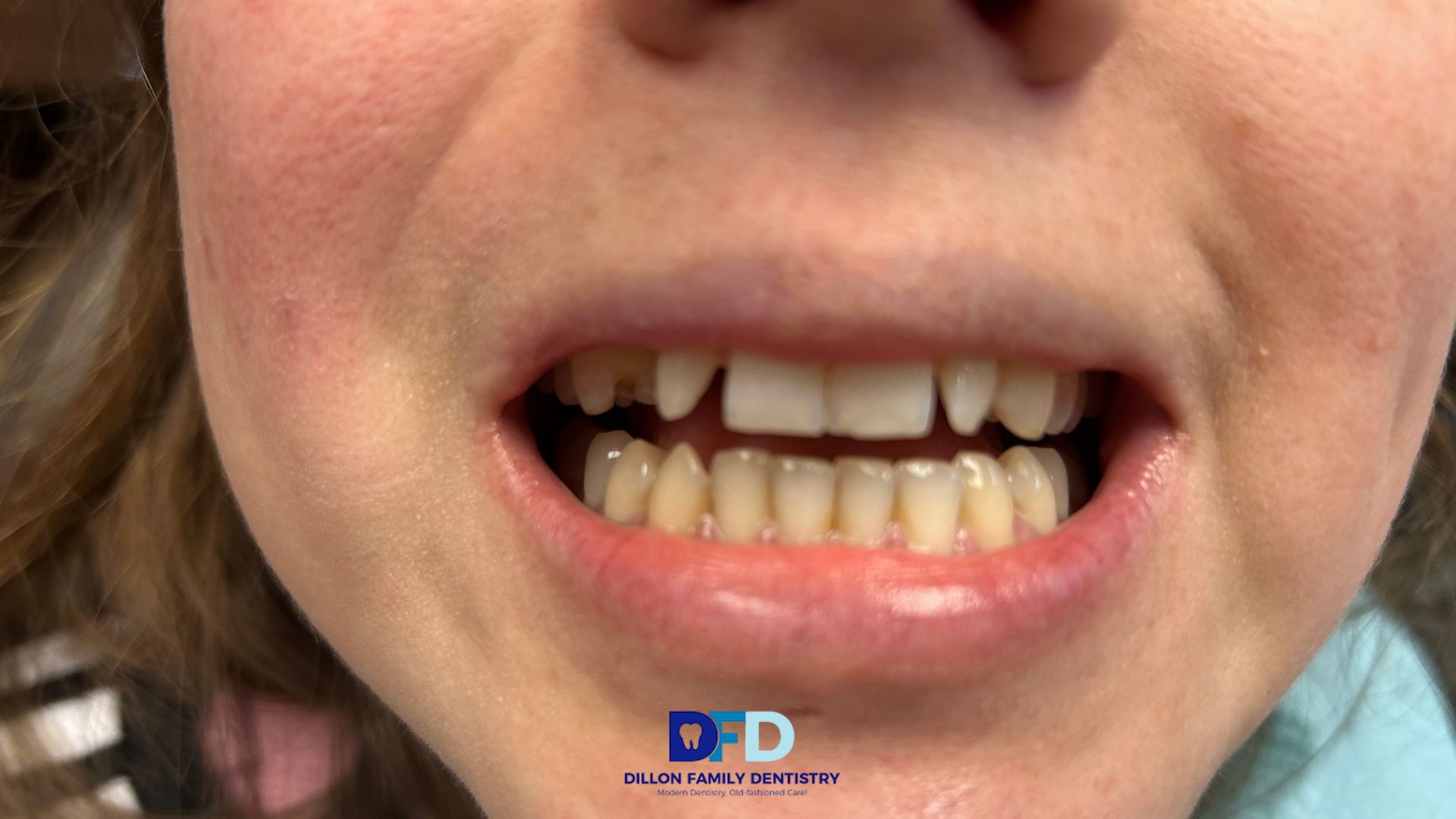
Chips that only penetrate the enamel layer of the tooth are very common, and these types of chips are the easiest to fix. Your dentist may either smooth over the rough edges or fill the damaged area with a tooth-colored bonding material to restore the appearance of your tooth. Typically, repair of this type is done in a single visit, and outcomes are very good.
- Moderate Breaks
You will notice sensitivity if a tooth breaks into the dentin (the layer under the enamel). The treatment for your broken tooth will depend on how much damage has been sustained. You may be able to have dental bonding, veneers or crowns placed on the tooth to stop future decay and restore the function and appearance of the tooth. All of these procedures will protect the remaining structure of your tooth.
- Severe Fractures
A broken tooth that has extended into the tooth’s pulp will require more significant dental treatment than just filling in the tooth. The treatment method for this type of injury involves a root canal, which removes damaged pulp, followed by a crown to protect the healthy portion of the tooth. This two-stage approach helps you preserve your natural tooth while preventing future infection.
- Vertical or Split Teeth
Vertical breaks or splits in a tooth are much harder to treat than horizontal splits; when a vertical split goes below the gum line, the tooth structure may not have enough support and will likely need to be extracted. Therefore, a dental implant in Haverford or Bryn Mawr will be your best replacement option, because they provide the most natural feeling and permanent replacement for missing teeth.
Why Choose Dental Implants for Severely Damaged Teeth?
Dental implants have become the gold standard for tooth replacement when it is too badly damaged to be saved. Unlike dentures and bridges, dental implants have unique advantages that include:
1. Preservation of Bone Health
Dental implants stimulate the jawbone, maintaining its density and strength. When a tooth is lost, the jawbone will undergo changes with time and will lose its structure; this happens through the processes of bone loss and subsequent physiological reactions.
2. Functionality
The implanted teeth (dental implants) function as natural teeth with full anchorage to the surrounding jawbone. Implants will allow an individual to eat, speak, and smile freely and confidently, without concern about dietary restrictions or denture/slippage issues.
3. Longevity
Dental implants will not only allow patients to have confidence using them, but they are very durable, and with the proper care these can last a lifetime. So, as compared to bridges, which may only last 10-15 years, dental implants are a cost-effective long-term investment.
4. Unaltered Neighboring Teeth
During the process of implanting a dental implant, the adjacent teeth are not affected and remain untouched. In contrast to bridges, dental implants are placed independently of adjacent healthy teeth that would be otherwise ground down.
At Dillon Family Dentistry, we will provide you with complete dental implant services, including an initial consultation and the final restoration of your dental implant, so that you can receive coordinated and expert care during your entire procedure.
Long-Term Care After Dental Trauma
Taking care of a broken tooth after you receive treatment is essential to help the tooth heal optimally and avoid future problems:
Follow all of the dental office’s post-treatment instructions carefully! This means taking medications as prescribed, avoiding certain foods, and returning for follow-up appointments.
Be sure to practice good oral hygiene; however, be gentle around the area where the tooth was treated for now. Brush twice daily and floss carefully to keep the area free from infection while it is still healing.
For the first few days after your treatment, avoid hard, sticky and/or chewy items that could potentially damage the repair and surrounding teeth. Stick with soft food on those days.
If you play sports or have a habit of grinding your teeth at night, wear a mouthguard to protect against dental injuries and to protect your investment in the dental work.
Schedule regular check-ups every six months so your dentist can keep an eye on the treated tooth and find any potential problems before they become serious!
Preventing Future Dental Emergencies
While accidents happen, many broken tooth emergencies are preventable with these simple strategies:
1. Be mindful of what you eat. Avoid chewing ice, hard candy, popcorn kernels, and other extremely hard foods. Cut corn off the cob rather than biting directly into it.
2. Address teeth grinding immediately. If you wake with jaw pain or your partner mentions grinding sounds, talk to your dentist about a custom night guard.
3. Keep up with dental care. Regular cleanings and exams identify weakened teeth before they break. Treating cavities promptly prevents them from compromising tooth structure.
4. Protect your teeth during sports. Always wear a properly fitted mouthguard during contact sports or activities with fall risk.
5. Don’t use teeth as tools. Never use your teeth to open packages, hold items, or tear tags. Keep scissors and other appropriate tools handy.
Why Bryn Mawr Residents Trust Dillon Family Dentistry
Read our reviews on any platform you trust. You will immediately know that we will provide you with the most compassionate, warm care in a no-pressure environment to help you in your time of need.
Having a trusted dental partner at the time of dental trauma can make a tremendous difference. Dillon Family Dentistry has provided comprehensive dental trauma care to the Bryn Mawr community for years. Dillon Family Dentistry combines advanced technology with a focus on providing compassionate and patient-centred service.
We understand that experiencing a tooth accident can be frightening and stressful. That is why we prioritise emergency services and act quickly to alleviate pain and save as much of the existing tooth structure as we can. We are committed to providing complete dental care, from urgent treatment to long-lasting options like implants, all in one facility.
At our office, we don’t just see you when you are in need. We see you as a whole. We want to teach you how to maintain good oral health and put together an individual plan that fits your lifestyle and budget. Whether you’re looking to fill a cavity or considering dental implants in Haverford or Bryn Mawr, we will guide you to the best option for you with integrity and experience.
Take Action: Your Next Steps
Although a broken tooth may not hurt immediately, it is always advisable to get it professionally evaluated. Left untreated, small problems may lead to larger ones, such as increased chances of developing an infection, further damage, and ultimately, loss of the tooth.
Do not wait until the pain gets worse or complications arise. If you experience a broken tooth emergency or dental trauma, contact Dillon Family Dentistry (Urgent Dentist Bryn Mawr) immediately for prompt, professional care.
Contact us now if you want to learn more about dental implants, or if you wish to schedule an urgent dental appointment. Restoring your smile and putting your mind at ease is our number one goal.
If you have a broken tooth, it is essential to get treated as soon as possible; the faster you see a dentist, the better your chances of being able to keep your tooth and not have to undergo more invasive procedures in the future. At Dillon Family Dentistry, we will work with you to maintain your oral health both today and in the future.
Frequently Asked Questions
Teeth are unable to regenerate in the same manner as bones. In contrast to bone, teeth do not contain the necessary living cells for regeneration. Once tooth enamel or dentin has been damaged, only a professional dental service can restore the integrity and functionality of the tooth. Even small chips in your teeth should be seen by a dentist as soon as possible to prevent further damage and/or bacterial infection to the tooth.
Whether or not it is an emergency depends on the state of the tooth. A cracked tooth can be termed an emergency if it causes extreme pain, continuous bleeding, the pulp (nerve) has been exposed to air, and there are signs of infection, such as swelling and/or a fever. Even if none of these symptoms exist, all cracked teeth need to be looked at quickly because they can deteriorate quickly and may result in an infection or loss of the tooth completely.
Failure to treat a broken (fractured) tooth can result in severe complications such as infection that could lead to a jaw or blood infection, an increase in sensitivity/pain, continued damage to the tooth by way of additional cracks/fractures, damage to adjacent (surrounding) teeth, formation of an abscess, and eventually loss of the tooth, with subsequent expensive replacement options.
Breaks with significant pain, bleeding, or exposure to the dental pulp should receive immediate treatment either the same day or as soon as possible. Minor chips that do not hurt should be treated within a week. However, you should not wait longer than a few days to get treated for any type of dental damage; any delay will allow bacteria to enter and become an infection.
The use of dental implants represents one of the preferred ways for replacing lost teeth when they can no longer be repaired. The procedure for dental implants requires that a titanium post be inserted directly into the bone of the jaw, which serves as an anchor point for the crown that will later be attached to the implant. Overall, dental implants provide the most robust, effective, and aesthetic way to replace missing teeth, and with appropriate care and maintenance, they can last forever!
While you are waiting until your next appointment for treatment, please refrain from eating foods that are hard (e.g., nuts), sweets (e.g., candy), frozen items (e.g. ice), sticky foods (e.g., caramel), foods that are extremely hot and/or cold (which may trigger a sensitivity), crunchy foods (e.g., chips, raw vegetables), and chewy foods (e.g., steak, bagels). Instead, eat only soft, room-temperature foods and chew on the opposite side of your mouth from where the pain is.
Many dental Insurance companies offer some coverage for emergency care of fractured teeth or to avert the likelihood of infection if they were damaged due to an accident, and this is usually covered at 50 – 80% of the total cost after you reach a certain deductible level. Please contact your Dental Insurance Provider or call our office to find out how much of your Dental Insurance will cover the cost of Broken Tooth Treatment.