
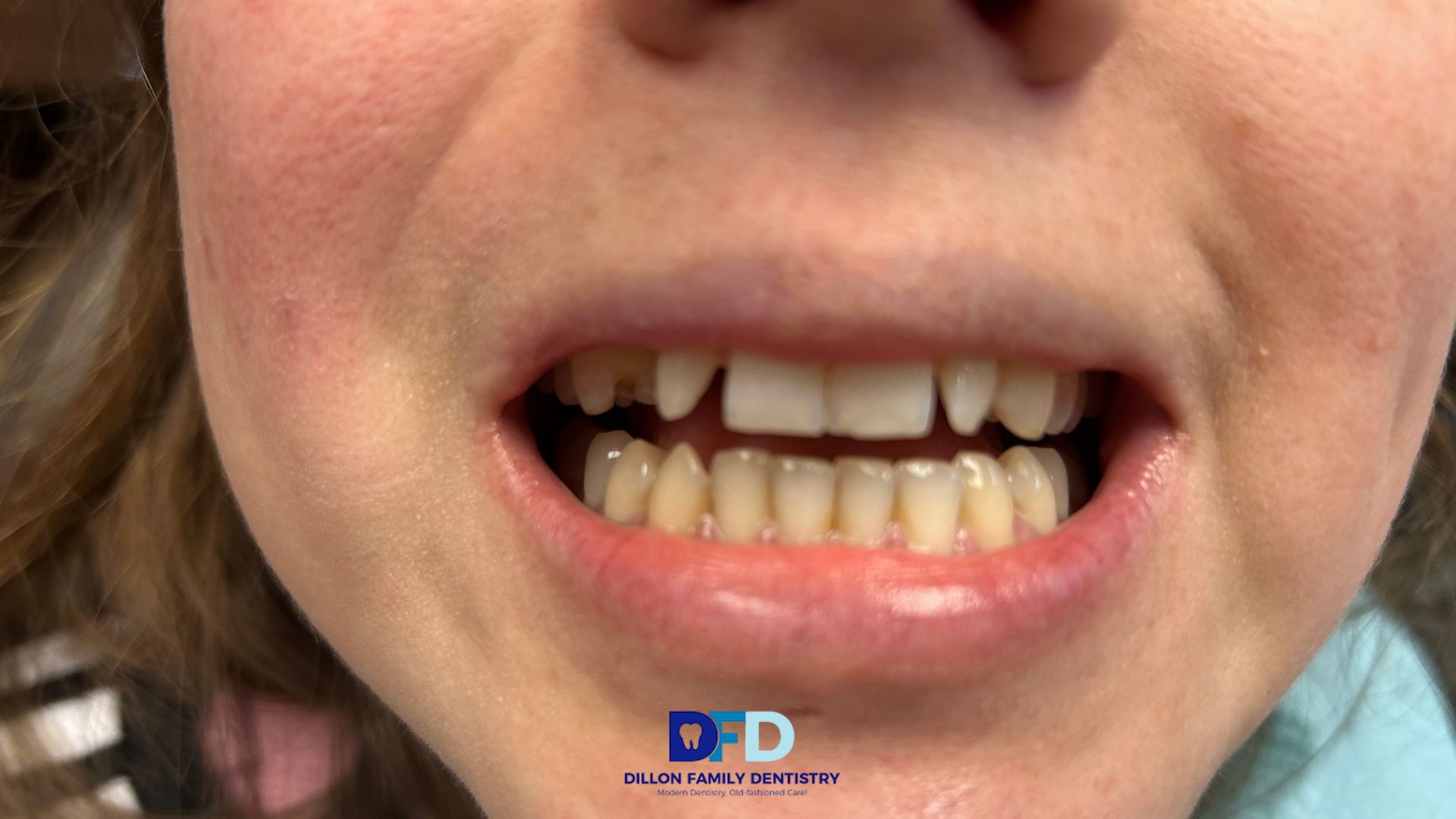
A sudden broken tooth can be frightening and painful. Whether you’ve bitten into something hard, experienced a sports injury, or simply discovered a crack, knowing what to do in those crucial first moments can make the difference between saving your tooth and needing more extensive treatment. At Dillon Family Dentistry in Bryn Mawr, PA, we understand that dental emergencies don’t follow a schedule, and we’re here to guide you through every step of managing a broken tooth emergency.
Why Teeth Break
Teeth are remarkably strong, but they’re not indestructible. Several factors can lead to a sudden break or crack:
Common causes include:
- Biting down on hard foods like ice, nuts, or hard candy
- Sports-related injuries without proper mouth protection
- Untreated cavities that weaken tooth structure (#1 reason)
- Large old fillings that compromise tooth integrity
- Teeth grinding (bruxism) that weakens enamel over time
- Sudden temperature changes in the mouth
- Facial trauma from accidents or falls
Understanding the cause helps prevent future incidents and guides your dental trauma care approach.
Immediate Steps: What to Do Right After Your Tooth Breaks
When you realize your tooth has broken, staying calm and acting quickly is essential. Here’s your step-by-step action plan:
Within the First 5 Minutes
- Rinse your mouth gently with warm water to clean the area and assess the damage. This helps you see the extent of the break and remove any loose fragments.
- Save any broken pieces if possible. Place them in a clean container with milk or your own saliva. These fragments can sometimes be reattached by your dentist.
- Control bleeding by applying gentle pressure with clean gauze or a damp tea bag. Most bleeding from a broken tooth should stop within 10-15 minutes.
Managing Pain and Swelling
- Apply a cold compress to the outside of your cheek near the broken tooth. This reduces swelling and numbs the area, providing temporary relief. Apply for 15 minutes at a time with 15-minute breaks.
- Take over-the-counter pain medication like ibuprofen or acetaminophen according to package directions. Avoid aspirin, which can increase bleeding.
- Cover sharp edges with dental wax, sugar-free gum, or even a small piece of gauze to protect your tongue and cheeks from cuts.
When to Seek an Emergency Dental Visit
Not all broken teeth require immediate emergency care, but many do. Here’s how to assess the urgency:
Seek Immediate Care If You Experience:
- Severe pain that doesn’t respond to over-the-counter medication
- Heavy bleeding that won’t stop after 15 minutes
- A tooth broken at or below the gum line
- Visible pulp (the soft inner tissue of your tooth)
- Facial swelling or signs of infection
- Difficulty breathing or swallowing
- A completely knocked-out tooth
Contact an urgent dentist in Bryn Mawr immediately if you experience any of these symptoms. At Dillon Family Dentistry, we prioritize dental emergencies and see patients experiencing dental trauma as quickly as possible.
Schedule an Appointment Soon If:
- You have a small chip with no pain
- The break is minor but has a rough edge
- You have mild sensitivity to hot or cold
- The tooth is cracked, but not causing severe discomfort
Even minor breaks need professional evaluation to prevent complications.
Types of Broken Teeth and Their Treatments
The type of break determines your cracked tooth treatment options. Here’s what you need to know:
- Minor Chips and Cracks
Chips that only penetrate the enamel layer of the tooth are very common, and these types of chips are the easiest to fix. Your dentist may either smooth over the rough edges or fill the damaged area with a tooth-colored bonding material to restore the appearance of your tooth. Typically, repair of this type is done in a single visit, and outcomes are very good.
- Moderate Breaks
You will notice sensitivity if a tooth breaks into the dentin (the layer under the enamel). The treatment for your broken tooth will depend on how much damage has been sustained. You may be able to have dental bonding, veneers or crowns placed on the tooth to stop future decay and restore the function and appearance of the tooth. All of these procedures will protect the remaining structure of your tooth.
- Severe Fractures
A broken tooth that has extended into the tooth’s pulp will require more significant dental treatment than just filling in the tooth. The treatment method for this type of injury involves a root canal, which removes damaged pulp, followed by a crown to protect the healthy portion of the tooth. This two-stage approach helps you preserve your natural tooth while preventing future infection.
- Vertical or Split Teeth
Vertical breaks or splits in a tooth are much harder to treat than horizontal splits; when a vertical split goes below the gum line, the tooth structure may not have enough support and will likely need to be extracted. Therefore, a dental implant in Haverford or Bryn Mawr will be your best replacement option, because they provide the most natural feeling and permanent replacement for missing teeth.