
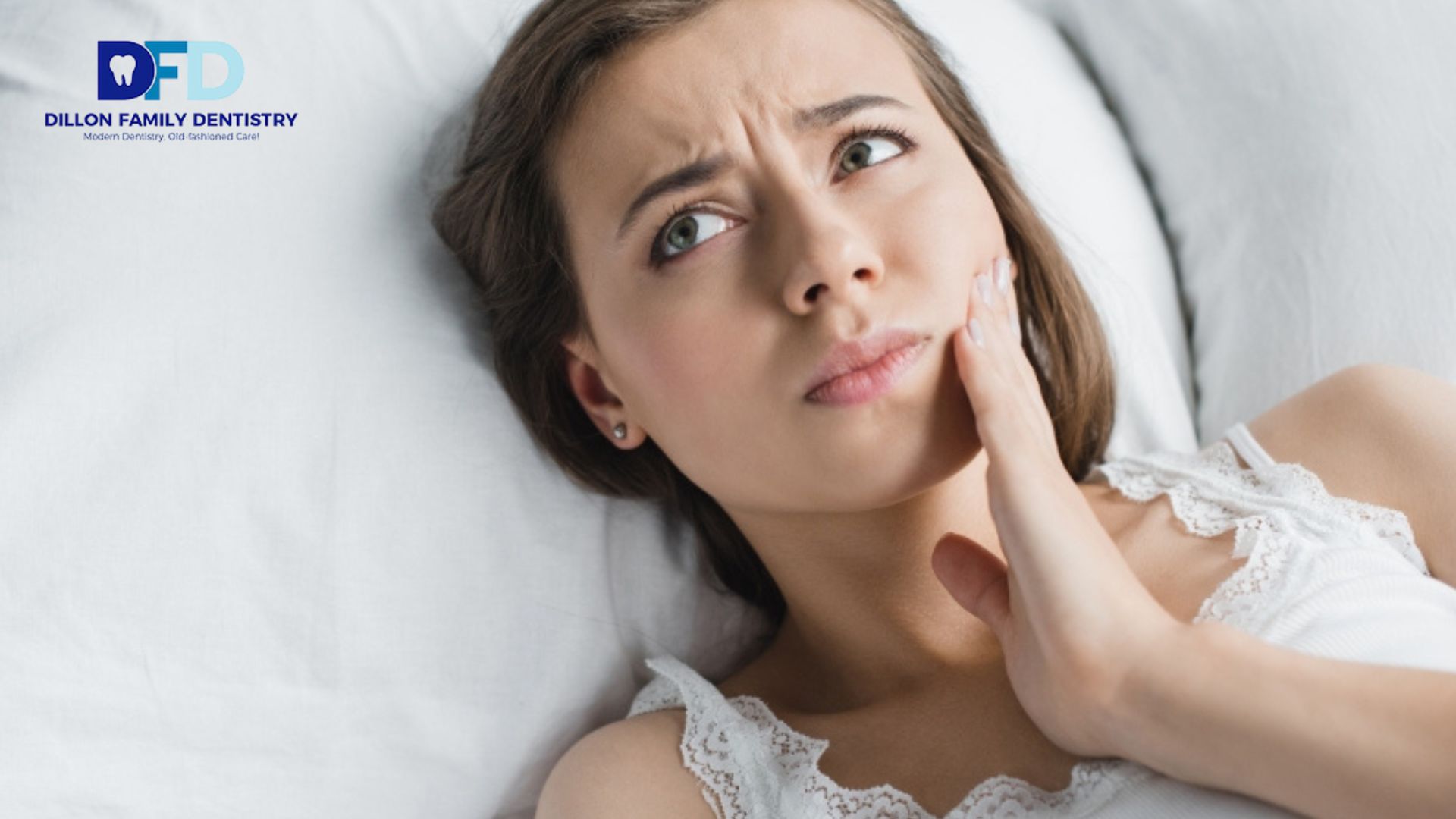
Tooth pain that intensifies at night is one of the most telling signs that something in your mouth needs professional attention soon. At Dillon Family Dentistry in Bryn Mawr, PA, Dr. David Dillon regularly sees Main Line patients who spend nights in significant discomfort because they were unsure whether their toothache was serious enough to call about. The answer, in almost every case, is yes: nighttime tooth pain has specific, diagnosable causes ranging from cavities and cracked teeth to dental abscesses and impacted wisdom teeth, and all of them respond far better to early treatment than to waiting.
There is a reason so many calls to dental offices happen first thing Monday morning. Patients spent the weekend managing tooth pain that started as a mild ache on Friday and turned into something they could not sleep through by Sunday night. I hear this story regularly at Dillon Family Dentistry on East Lancaster Avenue here in Bryn Mawr, and my response is always the same: nighttime tooth pain is not bad luck. It is biology, and it is your body asking for dental care.
This guide is my attempt to give you what you actually need at 1 a.m. when you cannot figure out why your tooth is throbbing and what to do about it. We are going to go through the science of why tooth pain follows this nighttime pattern, walk through every major cause from cavities and abscesses to wisdom teeth and gum disease, and cover both what you can do right now for relief and when you need to call us the next morning.
Why Does Tooth Pain Get Worse at Night? The Three-Part Answer
Most patients assume their tooth is getting worse when the pain spikes at night. Usually, the tooth itself has not changed much from afternoon to midnight. What has changed is your body’s relationship to that pain. Three things happen at night that amplify dental discomfort:
Blood Pools in the Head When You Lie Flat
Gravity is working for you all day. While upright, blood flows away from your head, and the pressure in your facial tissues stays relatively low. The moment you lie down, that changes. Blood redistributes upward. If a tooth is inflamed, whether from decay, a crack, an infection, or gum disease, the increased vascular pressure in that tissue makes every heartbeat feel like a throb. This is not imagination. It is the same mechanism that makes headaches worse when you lie down.
Cortisol Drops to Its Lowest Point
Cortisol is your body’s primary anti-inflammatory hormone, and it follows a very predictable daily rhythm: it peaks in the morning and reaches its lowest concentration between midnight and 3 a.m. During the day, cortisol partially suppresses the inflammatory response in a compromised tooth. Overnight, without that suppression, the inflammation is unchecked. Pain that was a manageable 4 out of 10 at noon can become a 7 or 8 by 2 a.m. for no other reason than cortisol biology.
No Distractions Means Full Attention on Pain
Your brain has a finite amount of attention to distribute. During the day, work, conversations, screens, movement, and social interaction all compete with pain signals for that attention. At night, in a dark, quiet room with nothing demanding your focus, your nervous system gives the tooth pain its full attention. Neurologically, the pain has not gotten worse. It has gotten louder.
Understanding these three mechanisms is genuinely useful because it tells you something important: if tooth pain is disrupting your sleep, the underlying cause is significant enough to have been generating a meaningful pain signal all day. You were just too busy to notice.
Seven Common Causes of Tooth Pain That Get Worse at Night
Nighttime tooth pain has a specific, diagnosable source in virtually every case. Here are the seven most common ones I see at my Bryn Mawr practice:
1. Cavities That Have Reached the Dentin or Pulp
A cavity in the outer enamel layer usually causes no pain at all. By the time decay has worked through the enamel and into the dentin, the middle layer of the tooth, you will start noticing sensitivity to sweets and temperature. When decay reaches the pulp, the nerve-rich inner chamber, the pain becomes constant, severe, and follows the classic nighttime pattern.
The frustrating reality is that many patients do not know they have a cavity until it is already deep because early decay is symptomless. This is exactly why twice-yearly cleanings and exams matter: we catch cavities at the enamel stage, where treatment is a simple filling, rather than the pulp stage, where root canal therapy may be needed. We treat cavities for patients across the Main Line, from Haverford and Ardmore to Villanova and Rosemont.
2. Dental Abscess
An abscess is a pocket of bacterial infection that has spread beyond the tooth itself into the surrounding tissue or bone. It produces the most intense and unmistakable tooth pain most patients ever experience: constant, throbbing, severe, and worse when lying down. Abscesses do not follow the intermittent pattern of other tooth pain. They are relentless.
Associated signs of a tooth abscess include swelling of the gum, jaw, or face, a foul taste or bad smell in the mouth, a pimple-like bump on the gum near the affected tooth, extreme sensitivity to biting or pressure, and, in advanced cases, fever. A dental abscess does not resolve without professional treatment. If you have nighttime tooth pain with any of these symptoms, call us the next morning at 610-981-1997. If you also have facial swelling, fever, or difficulty swallowing, do not wait until morning; go to Bryn Mawr Hospital emergency department to be stabilized with antibiotics, then see us for definitive dental treatment.
3. Cracked or Fractured Tooth
Cracked tooth syndrome is sneaky. During the day, patients often describe it as a brief, sharp pain when biting on something specific, maybe a 2-second zing that goes away immediately. They dismiss it. Then at night, lying flat with elevated head pressure and no distractions, the same crack produces a significant, lingering ache that stops them from sleeping.
The crack allows temperature and pressure to reach the pulp in ways that an intact tooth does not, and over time, the pulp becomes inflamed and cannot recover. Treatment depends on how deep the crack goes: a crown alone works for shallower fractures, while a root canal followed by a crown is needed if the pulp is involved. If you have been having episodic sharp tooth pain that nobody has been able to diagnose, come see us at our Bryn Mawr dental office. Cracked tooth diagnosis is part clinical art, and we have extensive experience with it.
4. Wisdom Tooth Pain at Night
Wisdom teeth are the last molars to erupt, typically between ages 17 and 25, and they almost always cause their most disruptive symptoms at night. There are two primary reasons. First, impacted wisdom teeth press against the adjacent molar or jawbone and generate a deep pressure-type pain that follows the positional amplification pattern. Second, partially erupted wisdom teeth create a flap of gum tissue over the partially emerged crown, a perfect trap for food and bacteria that frequently become infected. This condition, called pericoronitis, causes significant throbbing pain that is markedly worse when lying down.
Wisdom tooth pain at night that is accompanied by swelling, difficulty opening your mouth, or swollen glands in the neck is a sign of active infection that needs prompt attention. For most patients, the long-term solution is extraction, which we discuss in full at our consultation appointments.
5. Gum Disease and Periodontal Infection
Advanced gum disease creates pockets of chronic bacterial infection around tooth roots. Patients with periodontitis often describe a dull, deep ache that is hard to localize to a single tooth, swollen or receding gumline, and bleeding when brushing. This pain follows the nighttime pattern because, like all oral infections, it is amplified by positional blood pressure changes and the overnight cortisol drop.
Gum disease that is causing nighttime pain has typically reached a stage where a professional cleaning alone is not enough. Scaling and root planing, our deep cleaning procedure, removes bacteria from below the gum line and allows tissue to heal. We treat family dental patients across the Main Line with a conservative, least-invasive periodontal care approach.
6. Bruxism: Teeth Grinding While You Sleep
Bruxism is the habit of grinding or clenching teeth, and a significant portion of people who do it are entirely unaware because it happens during sleep. The signs I look for at exams include flattened chewing surfaces, small fracture lines in the enamel, and worn-down tooth edges. Patients with bruxism often report waking up with a sore jaw, tension headaches at the temples, and generalized tooth sensitivity.
The direct nighttime pain from bruxism comes from the stress it places on the periodontal ligament, the tissue anchoring teeth in the jawbone. That ligament becomes inflamed from repeated grinding and produces a diffuse achiness across multiple teeth. A custom night guard fabricated at our Bryn Mawr office is the most effective and conservative solution. It is also important to know that bruxism dramatically accelerates the development of cracked teeth. Learn more about our sleep apnea and sleep-related dental treatment options.
7. Sinus Pressure Referring to Upper Teeth
The maxillary sinuses sit directly above the roots of the upper back molars and second premolars. When those sinuses become inflamed from allergies, a cold, or a sinus infection, the pressure radiates down and produces what feels exactly like a toothache in the upper back teeth. This sinus-referred pain is more common than most people realize and is worth considering when multiple upper teeth hurt simultaneously without an obvious dental cause.
How to tell the difference: sinus tooth pain usually affects several teeth at once rather than one specific tooth, tends to change when you move positions (worse leaning forward, sometimes better standing), and is accompanied by other sinus symptoms like congestion, pressure behind the eyes, or post-nasal drip. A dental exam helps us rule out a true tooth cause so you know whether to see your dentist or your physician.
Dental Pain Relief at Night: What To Do Before You Reach the Dentist
These steps will not fix the underlying problem, but they can make the difference between a manageable night and a miserable one:
- Elevate your head. Stack extra pillows or sleep in a recliner. Reducing the blood pressure increase in your head is the single most effective positional relief for nighttime tooth pain.
- Take ibuprofen as directed. Ibuprofen is preferred over acetaminophen for tooth pain because it addresses both pain and the underlying inflammation. Take it with food and follow the package dosing guidelines.
- Cold compress on the cheek. Apply an ice pack wrapped in a cloth to the outside of your face near the sore tooth for 15-to-20-minute intervals. Cold reduces inflammation and provides numbing.
- Warm saltwater rinse. Dissolve a half teaspoon of salt in eight ounces of warm water and swish gently. Saltwater is mildly antibacterial and soothing to inflamed gum tissue.
- Keep the tooth away from extreme temperatures. Avoid very ho