
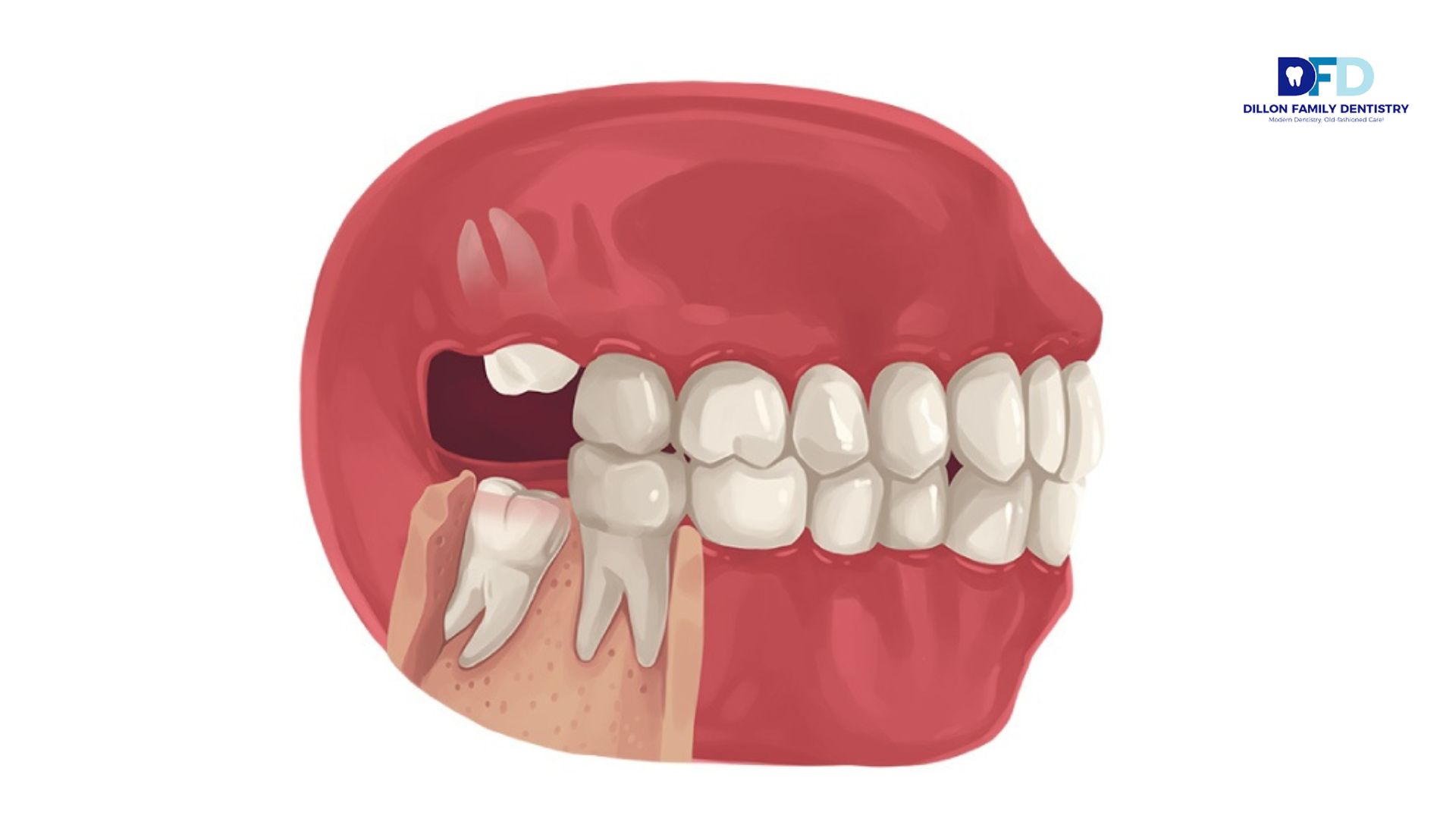
If you are experiencing pain from your third or “wisdom” teeth in Bryn Mawr, PA., there is a good chance the tooth may require removal due to either an impacted tooth, infected tooth or a crowded tooth that will not heal without surgical intervention. At Dillon Family Dentistry, located in the Main Line section of Philadelphia, Dr David Dillon takes X-rays of the impacted teeth and provides surgical extraction of those teeth if they are determined clinically necessary. The extraction can occur on the same day or through regular emergency services to the Bryn Mawr area, as well as those in Haverford, Ardmore, and Wayne.
If you’re reading this at midnight because you’re in pain from the back of your mouth, I want to put your mind at ease and give you an honest answer without dancing around the issue. A reason many patients call my Bryn Mawr office is that they are in pain from wisdom teeth, but for whatever reason, there seems to be some confusion about it. Some people will wait for months on end to see if their pain goes away, but it seldom does. Others will assume that since their wisdom tooth hurts, they need surgery, but that is not necessarily true either.
I am Dr. David Dillon from Dillon Family Dentistry, located on the Mainline and have evaluated and removed many wisdom teeth from the patients that I treat in Bryn Mawr, Haverford, Ardmore, Wynnewood, Wayne, and Villanova. It is my goal at this time to give you an accurate, evidence-based response regarding what is occurring within your mouth and what can or needs to be done about it.
Wisdom tooth pain that is persistent, worsening, or accompanied by swelling, infection, or difficulty opening your jaw almost always requires professional evaluation and, in most cases, removal. Pain that comes and goes temporarily during eruption may not. The only way to know for certain is with an X-ray and clinical exam. At Dillon Family Dentistry in Bryn Mawr, we offer same-day and emergency appointments for patients who can’t wait.
What Is Wisdom Tooth Pain and Why Does It Happen?
Third molars are called wisdom teeth, but they are the last teeth to come in. They usually grow in between the ages of 17 and 25; however, I see a lot of patients in my practice who are dealing with their wisdom teeth when they are in their 30s. The main reason why wisdom teeth create problems like impaction is simple: there isn’t enough room in the modern human mouth for third molars to develop correctly because of changes in the size of human mouths over time.
When there’s not enough space, a wisdom tooth can become impacted. That means it’s blocked from fully erupting and ends up stuck in one of several positions:
- Partially erupted through the gum but unable to fully emerge, creating a flap of gum tissue where food and bacteria collect
- Angled toward the adjacent second molar, pressing directly against it
- Growing horizontally, completely sideways, trapped under the gum and against bone
- Fully impacted, buried entirely beneath the gum and bone with no exit route
Each of these scenarios creates a different pattern of pain and risk. The common thread is that impacted wisdom teeth don’t clean properly, don’t sit correctly, and over time they cause problems, whether that’s infection, pressure, crowding, or cyst formation.
Understanding what’s happening with your wisdom teeth starts with a proper dental evaluation. Our family dental services in Bryn Mawr include panoramic X-rays and a thorough clinical assessment so we know exactly what we’re dealing with before recommending anything.
Signs You Need Wisdom Tooth Removal: What to Watch For
This is the part most patients get wrong. Not every wisdom tooth needs to come out, and not every twinge of discomfort means you’re headed for surgery. But there are clear signs that tell me removal is the right call. If you’re dealing with any of the following, don’t wait it out.
1. Persistent Pain or Pressure at the Back of Your Mouth
If you have a persistent dull pain in your mouth that occurs primarily when you chew or open your jaw wide, this is not typical. Eruption pain from growing teeth as a teenager may be mild and short-lived. If you’re experiencing continual pain for weeks or even months, something isn’t right. Impacted teeth won’t get better by themselves, and the pain will become cyclical, with each bout being more severe until the tooth has been treated.
2. Swollen, Red, or Bleeding Gums Behind Your Last Molar
The first thing to appear that usually indicates pericoronitis (a condition affecting the soft tissue around the partially erupted wisdom tooth) is that the flap surrounding the partially erupted tooth through the gum, called pericoronitis, will trap food debris and bacteria. The flap and surrounding area will swell and become red, and you may experience a bad taste and/or discharge. Short-term treatment for pericoronitis consists of antibiotics and surgical cleansing of the tissue; however, in most cases, pericoronitis continues to return until the offending tooth is extracted. I have repeatedly seen this pattern develop during my years working with patients who delay their wisdom tooth extractions.
3. Difficulty Opening Your Jaw or Chewing
When an infected molar or the inflammation connected to an infected molar spreads to the muscles near the jaw, trismus (or “jaw stiffness”) can develop. Are you having difficulty fully opening your mouth? Do you avoid eating certain foods because of pain when you bite them? If so, your wisdom teeth may be contributing to this problem. Lower wisdom teeth are the most common culprits of trismus, meaning that severe irritation has occurred as a result of the situation worsening beyond mild irritation.
4. Headaches and Earaches That Don’t Have a Clear Cause
Many people are shocked to learn that their impacted wisdom teeth may also be contributing to the source of their headaches or earaches. The nerves used by the impacted wisdom teeth also travel to the jaw joint, ears and temples. When an impacted wisdom tooth applies pressure and/or causes inflammation on those areas, it may result in a radiating pain directed towards the head and/or ears as if it were a tension headache or sinus issue. If you’ve tried treating what you think were tension headaches or sinus issues with no relief, consider having your dentist rule out any possible relationship between your impacted wisdom teeth and your headaches or earaches.
5. Bad Breath or a Persistent Bad Taste
Sulfur compounds are produced by bacteria trapped around a partially erupted wisdom tooth, producing chronic bad breath that is not relieved by brushing, flossing or mouthwash. Pus or discharge from the back of your mouth indicates an active infection that needs treatment immediately, not next month.
6. Visible Shifting or Crowding of Your Other Teeth
A wisdom tooth can push on a second molar, creating a domino effect. Patients may feel like their front teeth have become tighter and are now overlapping where they were not before, or that their bite feels different. People who have completed orthodontic work before getting their wisdom teeth removed are often bothered by this. Removing the wisdom teeth will not always eliminate the crowding that exists; however, they will cease adding additional pressure to the area and can help to prevent the crowding from getting worse.
When You Don’t Need Wisdom Tooth Removal
I’ll be direct here: not every wisdom tooth needs to come out. I’m not in the business of recommending procedures patients don’t need. If your wisdom teeth are:
- Fully erupted with a normal upright position
- Accessible and easy to clean with a toothbrush and floss
- Not causing pain, infection, or pressure on adjacent teeth
- Not showing cysts or bone changes on X-ray
…from there, the wait-and-see approach is very reasonable. You will be checked each appointment and have periodic X-rays taken to monitor any changes. Once there is a significant change, we will talk about it at that time.
One item I want to make you aware of is that there have been many studies done which state that as you get older, the more complicated the surgical procedure will be to remove wisdom teeth. Typically, by the time you are in your mid-late 20’s, your roots are fully developed, and your bone density increases. This does not mean that one should not wait; however, if there is a chance that you will need to have them removed, you should do this sooner rather than later in most cases, so that you will heal faster and have less risk involved.
Emergency Wisdom Tooth Removal in Bryn Mawr: When It Can’t Wait
Some wisdom tooth situations are urgent. If you’re experiencing any of the following, call our Bryn Mawr office the same day rather than trying to manage it at home:
- Severe, unrelenting pain that over-the-counter medications are not controlling
- Visible swelling in your jaw, cheek, or neck (which can indicate a spreading infection)
- Fever combined with tooth or jaw pain is a classic sign of bacterial infection
- Difficulty swallowing or breathing, which may indicate the infection is spreading into the throat. This is a medical emergency.
- Pus or significant discharge around the wisdom tooth
If you have a dental infection, it can easily spread. An untreated infection with your wisdom tooth could spread to your jaw, neck, or even your airway. You shouldn’t try to manage the situation with ibuprofen and hope things get better. If you have bad pain, a swollen face, or a fever with dental pain, you need to get a dental evaluation today.
At Dillon Family Dentistry, we try to get emergency patients in on the same day when possible, and we will do our best to get you seen as quickly as possible if you tell us you have terrible pain due to a wisdom tooth when you call.
What Happens During Wisdom Tooth Removal at Our Bryn Mawr Office
A lot of the anxiety around wisdom tooth extraction comes from not knowing what the process actually looks like. Let me walk you through it.
Step 1: Evaluation and X-Rays
We begin by taking x-rays, typically a panoramic x-ray, which will show us all four wisdom teeth, their root structure, angle and relationship to neighbouring teeth and nerves. This allows me to see exactly what type of extraction we’re going to do and the safest and most efficient way to do it.
Step 2: Anaesthesia
The local anaesthetic is administered to completely numb the area, which is why this step is done slowly. The goal of a properly numbed extraction is for it to be a comfortable experience. Additional sedation options can be discussed during your consultation if you desire.
Step 3: The Extraction
The extraction of a fully erupted wisdom tooth is performed using the same process as with other simple extractions. The dental surgeon will use a dental elevator to loosen the tooth and then will use forceps to remove the tooth. However, when removing an impacted wisdom tooth, the surgeon will create a small incision in the gum tissue to access the tooth. Depending on the position of the tooth, he or she may need to remove some bone around the tooth and, in some situations, section the tooth into several pieces so that it may be removed more easily and with less trauma.
During the extraction procedure, you will feel pressure the entire time, but you should not experience sharp or acute pain at any time. If at any time during the procedure you experience sharp or acute pain, raise your hand and the dentist will stop the procedure and re-medicate you in the area.
Step 4: Socket Care and Discharge
Once the extraction has taken place, your socket will receive irrigation and cleansing. Then, individual gauze will be placed to assist in bleeding control. Prior to your departure, you will receive written post-operative instructions and instructions on what you should expect and when to contact us.
Swollen Wisdom Tooth Pain Relief: What to Do Before Your Appointment
If you’re waiting for your appointment and need to manage pain in the meantime, here’s what actually works:
- Ibuprofen (400 to 600 mg, as directed on the label): This is the most effective over-the-counter option for dental pain because it addresses both pain and inflammation. Do not exceed the recommended dose.
- Warm salt water rinses: Half a teaspoon of salt in a glass of warm water, swished gently around the back of the mouth, helps reduce bacterial load and ease gum inflammation. Do this several times a day.
- Cold compress to the outside of your cheek: 15 to 20 minutes on, 20 minutes off, reduces swelling and numbs the area somewhat.
- Clove oil on a cotton swab: Eugenol, the active compound in clove oil, has mild anaesthetic properties. Apply directly to the sore gum for temporary relief.
- Avoid hard, crunchy, or sticky foods that can aggravate the area.
These measures buy you time. They do not fix the underlying problem. If your pain is severe, your face is swelling, or you have a fever, skip the home remedies and call us now.
Wisdom Tooth Removal Recovery: What to Expect
Recovery from wisdom tooth extraction is different for everyone, but here’s what most patients experience:
- Day 1 to 2: Mild to moderate soreness, some swelling, possible oozing of blood-tinged saliva. Rest, keep your head elevated, and apply ice packs.
- Day 3 to 5: Swelling often peaks around day 2 to 3 before improving. Soreness decreases steadily. Warm compresses can help at this stage.
- Days 5 to 7: Most patients feel well enough to return to normal activities. Soft foods only near the extraction site.
- Week 2: Soft tissue is largely healed. Stitches (if placed) dissolve or are removed at a follow-up visit.
The only thing you need to stay away from after having teeth removed is a dry socket. When a blood clot becomes detached either prior to or during the healing process, it will cause a dry socket. You should not drink with straws, smoke, rinse vigorously or spit for 3 days after your extraction/s to decrease the chances of a dry socket happening. You will need to call us if you have pain in your jaw that radiates outwards 3 to 5 days after your extraction, as it may require treatment for a dry socket and should be treated as soon as possible.
Why Main Line Patients Choose Dillon Family Dentistry for Wisdom Tooth Removal
There is no shortage of dental offices along Lancaster Avenue and throughout the Main Line. So let me tell you what sets our approach apart.
- We evaluate before we recommend. I won’t tell you that you need a wisdom tooth out until I’ve seen X-rays and done a proper exam. Extraction is never a reflex.
- Same-day and emergency availability. If you’re in pain, you shouldn’t have to wait two weeks. We prioritise urgent cases.
- Transparent about the procedure and the cost. You’ll know what to expect before we start, not after.
- Full-service care under one roof. From evaluation through extraction and any needed follow-up, we handle it all in Bryn Mawr, so you’re not being referred out to multiple providers.
- Welcoming new patients. Whether you live in Bryn Mawr, Haverford, Ardmore, Wayne, or Villanova, we’re accepting new patients and can often see you quickly.
Read what our patients say on our testimonials page, or learn more about my background and approach on the Dr. Dillon page.
Wisdom Tooth Removal Cost in Bryn Mawr, PA: What You Need to Know
I know cost is a real factor in these decisions, so here’s an honest breakdown:
- Simple wisdom tooth extraction (fully erupted): $150 to $350 per tooth
- Surgical extraction (partially impacted or angled): $300 to $550 per tooth
- Fully impacted wisdom tooth removal: $400 to $700 per tooth
Most dental insurance plans cover 50% to 80% of medically necessary wisdom tooth extractions. We verify your benefits before your appointment so you know your out-of-pocket cost upfront, not after the fact.
We accept most major dental insurance plans. Visit our dental insurance page for details. We also offer flexible dental financing for patients who prefer to spread payments over time.
Ready to Get Relief? Schedule Your Wisdom Tooth Evaluation in Bryn Mawr
Your body is communicating to you that you need to deal with the issue of your wisdom teeth when you experience pain. The problem won’t resolve on its own, and the longer you delay seeking treatment, the more complex and expensive it will be to resolve. If you have symptoms that are indicative of a problem (pain or swelling, among others), don’t wait for another week to go by and address the issue.
Contact Dillon Family Dentistry to schedule a wisdom tooth evaluation or request a same-day appointment. We serve patients throughout Bryn Mawr, Haverford, Ardmore, Wynnewood, Wayne, Villanova, Rosemont, Gladwyne, Radnor, and the broader Main Line area. Let’s get you out of pain.
Frequently Asked Questions: Wisdom Tooth Pain and Removal in Bryn Mawr
1. How do I know if my wisdom tooth needs to be removed?
If you have ongoing pain, swelling, recurrent infections, limited movement of the jaws, or X-ray evidence of impaction, extraction is typically necessary. An examination of the mouth and jaw, and X-rays at Dillon Family Dentistry (Bryn Mawr) will provide a clear answer. A reason that is clinically based must exist before we will recommend extraction.
2. Can wisdom tooth pain go away on its own?
Eruption may cause mild discomfort, sometimes giving short-term relief. However, the pain associated with infection or impacted teeth rarely resolves permanently. Instead, the cycle of pain will return and typically be worse each time until the source of the pain is treated. Relief does not indicate that an infected tooth is fine.
3. What are the signs of an impacted wisdom tooth?
Constant pain or pressure on the back of your mouth, also referred to as the jaw, sore or swollen gum (behind last molar), unable to open jaw wide, bad taste or breath (that doesn’t go away when you brush) coming from teeth; you also feel pain in your ears or temples. The x-ray shows that the tooth is impacted and the severity of the impaction.
4. Is wisdom tooth removal painful?
No. We use local anaesthesia so you don’t feel pressure, not sharp pain. Patients consistently tell me the procedure was far less uncomfortable than they expected. Some soreness for 2 to 5 days after is normal, manageable with ibuprofen, and part of normal healing.
5. How long does wisdom tooth removal recovery take?
Most patients feel significantly better within 3 to 5 days. Soft tissue heals in about 2 weeks. Most people return to work or school within 2 to 3 days. Full bone healing takes a few months but doesn’t affect your daily life.
6. Can I get an emergency wisdom tooth removal in Bryn Mawr?
Yes. Dillon Family Dentistry makes every effort to accommodate same-day and urgent appointments for patients in Bryn Mawr and across the Main Line. If you have severe pain, facial swelling, or fever with dental pain, call our office first thing in the morning and tell us it’s urgent.
7. What happens if you leave an impacted wisdom tooth untreated?
The dangers may lead to repeated infections (such as inflamed gums), the formation of cysts near your impacted tooth, damage to adjacent second molars, loss of jawbone, and increasingly difficult to pull out as you age. Longer-rooted teeth will develop progressively more complex bony structures, requiring longer bony roots and more complicated extractions in older people.
8. What is pericoronitis?
Pericoronitis is an infection of the gum tissue around a partially erupted wisdom tooth. The gum flap traps food and bacteria, leading to acute pain, swelling, bad breath, and sometimes fever. It can be managed short-term with antibiotics, but removal of the wisdom tooth is usually the only lasting solution.
9. At what age should wisdom teeth be evaluated?
Preferably, between the ages of 16 and 18 (mid-to-late teens), just before the roots become fully developed. Getting your wisdom teeth checked at an earlier age is generally a much less complicated procedure, and the chances of developing any complications from the procedure are significantly reduced compared to getting them checked later. Having said that, even if you are in your 20s or 30s and have never had your wisdom teeth checked, you should not have any reservations about getting them evaluated now.
10. How much does wisdom tooth removal cost in Bryn Mawr?
For a normal extraction of a wisdom tooth, the average cost is between $150 and $350. If the tooth is surgically impacted, the extraction can cost between $300 and $700. Dental insurance typically pays for 50% to 80% of medically necessary wisdom tooth removals. Coverage is verified prior to your appointment, and flexible payment plans are available if needed.


