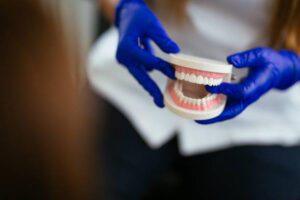
Loose dentures are a common concern found among denture wearers in Bryn Mawr and other areas. However, if you’re experiencing loose dentures, you’re not the only one. If your dentures have continuously been loose after an initial adjustment period, it may have a negative impact on both your confidence in your appearance and your comfort level while eating and speaking. Furthermore, it could negatively affect overall health.
Dillon Family Dentistry’s goal is to provide assistance in understanding why dentures may become loose or ill-fitting and also supply real-world solutions to restore the proper fit and function of those dentures. Whether you’re considering tightening (relining) your dentures, making new ones, or exploring alternatives with dental implants in Bryn Mawr, all popular among Main Line patients, this guide will help you make an informed decision about your oral health.
Why Dentures Feel Loose
When you first receive dentures, some adjustment period is expected. However, if your dentures continue to feel loose or become loose over time, several factors could be at work.
The ADA actually recommends new dentures every 5 years on average. We love committing ourselves to taking the time to explain all of the options and do whatever our patients feel is right for them!
Bone Resorption: The Primary Culprit
The primary cause of dentures fitting loosely is bone resorption. The jawbone that once anchored your teeth helps support your denture. After the tooth roots are removed, the bone no longer receives the stimulation needed to maintain its structure. Over time, the body begins to absorb (resorb) the jawbone, which can change its shape and affect how your dentures fit.
Everyone who wears conventional dentures will experience some degree of jawbone change, though the rate varies from person to person. Some individuals may lose significant bone within the first year, while others maintain their jawbone structure for much longer. As these changes occur, dentures may no longer fit as comfortably or securely as they did initially, as the contours of the gums and jaw gradually shift.
Weight Loss or Gain
The amount of weight on your body will affect the fit of your dentures. If you lose weight, the soft tissue (gums) of your face will also lose some of their volume, which will change how your dentures fit. The opposite is also true with weight gain; changes in your facial shape can affect how your dentures fit.
Normal Wear and Tear
Dentures are not made to be a permanent fixture in your mouth. A denture made with average materials typically has a lifespan of around five to seven years. As time goes by, the denture’s base will erode, the artificial teeth can break, and the denture’s overall strength diminishes, leading to looser fits.
Poor Initial Fit
One reason dentures often feel loose is that they do not fit well in the beginning. This is why you need to choose Family Dentistry practices that have experience working with dentures (such as Dillon Family Dentistry). A properly fitted denture should feel snug and secure without causing discomfort or excessive pressure.
Gum Disease or Oral Health Changes
Your dentures may fit differently because of changes occurring in your oral health, including infection or inflammation of the gums. The swelling or shrinking of gum tissues can affect how well your dentures rest against your gums.
Signs Your Dentures Need Professional Attention
Recognizing when your dentures need adjustment can prevent more serious problems. Watch for these warning signs:
- Dentures slip when eating or speaking
- Clicking sounds when you talk or chew
- Food particles consistently getting trapped under dentures
- Sore spots or irritation on your gums
- Difficulty chewing certain foods
- Changes in your facial appearance or bite
- Needing excessive denture adhesive to keep dentures in place
If you experience any of these symptoms, schedule a denture adjustment in Bryn Mawr with our team.
How Dentists Fix Loose Dentures
The good news is that loose dentures can often be corrected. Your dentist will evaluate your specific situation and recommend the most appropriate solution.
Denture Relining
Relining is one of the most common solutions for loose dentures. Refurbishing existing dentures is a bit of a passion project for us, as it fits with our conservative/ minimally invasive approach to dentistry. This process involves adding new material to the tissue side of your denture to improve fit and comfort. There are two types of relining:
Soft Reline: A pliable material is added to provide cushioning, ideal for patients with sensitive gums or significant bone loss. Usually, we do this immediately after extractions to be kinder to the tissues as they heal.
Hard Reline: A more durable acrylic material is used to reshape the denture base, offering a longer-lasting solution for moderately loose dentures.
Most relining procedures can be completed in a single visit, though some cases may require sending dentures to a lab for more extensive work.
Denture Rebasing
If a patient’s denture teeth are still in good condition but the denture base is worn down, rebasing may be the most effective solution. Rebasing involves replacing the acrylic denture base while retaining the existing teeth, creating a new, properly fitting foundation.
Complete Denture Replacement
Dentures that are significantly worn, damaged, or so poorly fitting that they cannot be corrected with simple adjustments will need to be replaced. Today’s modern denture materials, available at Bryn Mawr dental offices, offer improved durability, aesthetics, and comfort compared to older materials.
Denture Adhesives: A Temporary Solution
Denture adhesives are intended to be used temporarily, and not as a long-lasting solution. If you use adhesive to hold dentures in place throughout the day, please visit your dentist for an adjustment or a replacement option.
Dentures vs Dental Implants: A Permanent Solution for Stability
Many patients frustrated with loose dentures ask about more permanent alternatives. This is where understanding dentures vs dental implants becomes important.
Traditional Dentures
The traditional type of dentures is held to the gums with suction and correct fitting. They are cheaper to obtain than other prosthetic teeth options and require no surgery; however, they do not stop bone loss and will likely require either adjustment or complete replacement over time.
Implant-Supported Dentures
Implant-supported dentures combine the benefits of both options. Dental implants are surgically placed in your jawbone to serve as anchors for your dentures. This approach offers several advantages:
- Prevents bone loss by stimulating the jawbone
- Provides superior stability with no slipping
- Allows you to eat your favorite foods confidently
- Eliminates the need for messy adhesives
- Feels more like natural teeth
- Can last decades with proper care
Full Dental Implants
If you’re looking for a tooth replacement that looks and feels like your own, individual dental implants offered by Dillon Family Dentistry can provide you with the best solution for missing teeth. Although this is the highest cost option available, it offers the best combination of function, aesthetics, and longevity. This is truly one of those ‘you get what you pay for’ options. When faced with all of these options, it is clear that the stability and confidence of implant-supported dentures is what everyone would choose if time and money were not an issue.
Preventing Denture Problems: Maintenance Tips
Proper care can extend the life of your dentures and minimize looseness:
- Clean dentures daily using a soft brush and denture cleaner
- Remove dentures at night to give your gums time to rest
- Handle with care to avoid dropping and damaging them
- Keep them moist when not wearing them to prevent warping
- Visit your dentist regularly for checkups and adjustments
- Avoid DIY repairs, which can damage dentures permanently
Why Choose Dillon Family Dentistry for Your Denture Needs
At Dillon Family Dentistry, located in Bryn Mawr, we are aware of the fact that every patient has different needs. This is what sets us apart. We ALWAYS offer no-pressure/no-judgement consultations and treatment. Our knowledgeable team provides a full range of denture services, including fitting, adjusting, and discussing options for dental implants, and we trust our patients to make the RIGHT decision for their needs and wants.
At our office, we use the latest advancements in technology and combine them with a “hands-on” approach to provide you with a personal touch when it comes to tooth replacement. We have everything you need to ensure your dentures fit comfortably and function as naturally as possible, and most importantly, to help you regain confidence in your smile.
Do you have loose dentures? Dillon Family Dentistry can help. Schedule a consultation today to learn more about your treatment options. We’ll work with you to find the most effective solution for your needs, comfort, and budget.
Frequently Asked Questions About Loose Dentures
Most dentures need relining every one to two years, depending on the rate of bone resorption and how well you maintain them. Regular dental checkups help your dentist determine the right timing for your specific situation.
Do not attempt to do any adjustments or repairs on your dentures at home because DIY adjustments can be damaging to both the denture(s) and the surrounding oral structure. Visit a dental professional who has expertise with denture adjustments for assistance.
Typically, it takes between 3 and 4 weeks for most people to become completely comfortable with their new dentures. During this adjustment phase (which may have symptoms such as increased salivation, mild alteration in speech, and occasional discomfort), it is necessary to seek advice from a dentist if any of these issues continue to cause concern beyond this time frame.
Loose dentures can pose risks to your oral health. They may cause sore spots on the gums, increase the risk of infection, make it difficult to eat nutritious foods, and even create a choking hazard if they shift or become dislodged while eating. Loose dentures can also speed up the loss of your jawbone and change the shape of your face.
The cost of a denture reline can vary depending on the type of reline needed and your location. In most cases, soft relines are less expensive than hard relines. Most dental insurance policies provide some coverage for this type of care. Be sure to review your current policy or benefits before scheduling an appointment. For specific pricing information, please contact Dillon Family Dentistry.
It’s common for Denture adjustments, relines, and repairs to be covered by all dental insurance plans; however, coverage will vary depending on which plan you choose. Our team is here to help you understand your insurance coverage and what your out-of-pocket costs may be once treatment is complete.
Under normal conditions, a high-quality denture will last between 5 and 7 years when well-maintained. Changes in your jaw shape can sometimes require denture replacement sooner than expected. Regular dental checkups help ensure your dentures continue to fit properly.
In many instances, the answer is yes! If you have worn dentures for an extended period, significant jawbone loss may occur, making bone grafting necessary before implants can be placed. Your eligibility for dental implants will be determined through a comprehensive evaluation.