
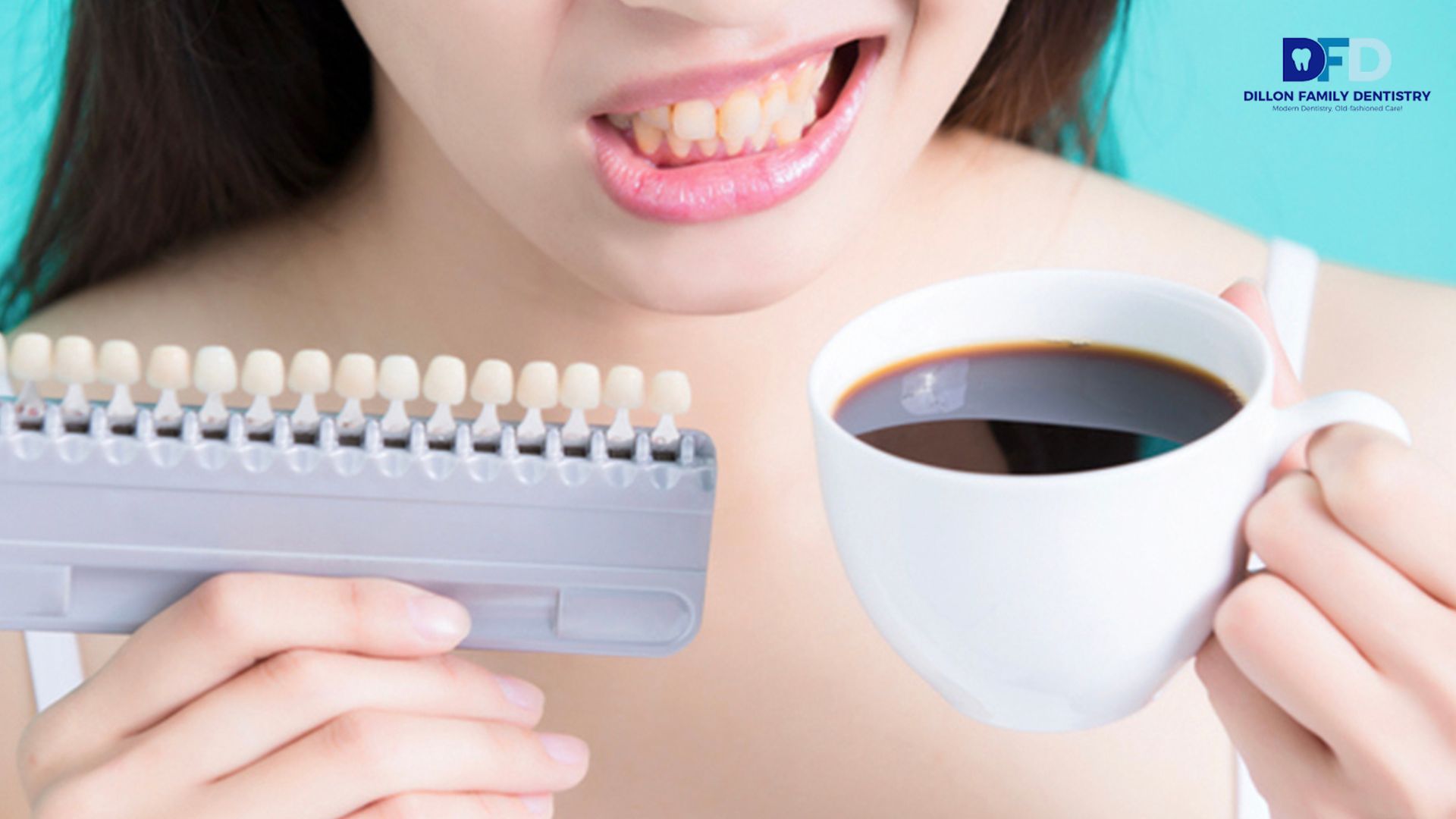
Discoloration of teeth is caused primarily by stains such as coffee and red wine due to tannins and chromogens, which will bond to the surface enamel of the tooth. For mild stains, you can complete at-home whitening remedies; however, for deeper, quicker, longer-lasting outcomes, visit a Bryn Mawr dental office for professional whitening treatment. Dillon Family Dentistry on the Main Line specializes in personalized whitening options for all of its patients located in Bryn Mawr, Haverford, Ardmore, and the greater Philadelphia metropolitan area.
For those of us living in Bryn Mawr, pretty much everyone has a favorite place to stop for morning coffee, a favorite diner or cafe along Lancaster Ave. And most likely, you have also visited a Main Line restaurant for happy hour and enjoyed sipping a nice Cab. These common daily/weekly activities are part of the routine that makes up a typical Bryn Mawr lifestyle. You may not even be aware of the fact that every time you enjoy these small pleasures, you’re also creating additional stains on your teeth.
The good news is that coffee and wine stains on the teeth are not permanent and with a little effort, can be removed, and your smile will continue to look great. There are many ways to eliminate these stains, including some simple daily habits, along with professional whitening right here in Bryn Mawr; for most patients who seek my help at Dillon Family Dentistry, I see this every week. Many patients come in after they have tried whitening strips from CVS, to no avail, and when they complete a professional whitening plan with me, it’s like the two have nothing to do with one another.
In plain English, let me break this down so you know exactly how I discuss this with my patients; no junk here, only what you really need to know.
Why Coffee and Wine Stain Your Teeth So Effectively
Before you can remove teeth stains, it helps to understand exactly why they form. Both coffee and red wine contain two key compounds that work together against your enamel:
- Tannins: These plant-based polyphenols create a static charge that makes color pigments cling to the surface of your enamel. Red wine is particularly high in tannins.
- Chromogens: These are intensely pigmented molecules that latch onto enamel once tannins soften the surface. Coffee is full of chromogens, which is why even a single cup leaves a residue.
- Acidity: Both drinks are acidic, which temporarily softens enamel and opens up microscopic pores, allowing staining agents to penetrate more deeply.
Tooth enamel appears to be smooth and sealed, and under a microscope, tooth enamel can appear to be very porous and similar to sandstone in texture. The pores in enamel can absorb pigment from all sources of food or beverage that we consume; this can be accelerated if someone is drinking multiple cups of coffee every morning, as many commuters on the Main Line do. Over time, these stains build up layer after layer.
There is also a difference between extrinsic and intrinsic stains. Extrinsic stains are surface stains found on the enamel of teeth, and intrinsic stains are below the enamel and in the dentin of the tooth. Most coffee and wine stains begin as extrinsic but can migrate deeper over time, especially if not treated for many years, and this is when over-the-counter products begin to fall short in treating these stains.
At-Home Methods for Coffee Stains on Teeth Removal: What Actually Works
Whitening Toothpaste
Whitening toothpastes include gentle abrasives and should be used to remove surface stains with lower amounts of hydrogen peroxide as a form of polishing. They are designed to provide ongoing maintenance for your teeth, but may take time to remove the stains caused by daily use of coffee and tea over time.
Baking Soda Paste
Baking soda has been shown to be a safe and effective abrasive treatment. To do this, combine baking soda with water, then gently brush your teeth for two minutes, once or twice a week. The Journal of Dentistry has published scientific studies proving that baking soda toothpaste is better at removing extrinsic staining than traditional toothpaste. Remember to use it moderately to avoid damaging your enamel.
Hydrogen Peroxide Rinse
Mild bleaching occurs by rinsing with equal parts of 3% hydrogen peroxide and water 1 to 2 times a week. Hydrogen peroxide is the same active ingredient used in professional whitening, but it is diluted significantly. Swish hydrogen peroxide with water for about one minute, then rinse your mouth thoroughly with water afterward. Do not swallow the rinse.
Oil Pulling
The technique is performed by swishing 1 tablespoon of either coconut oil or sesame seed oil in your mouth for 10-15 minutes. Studies indicate it may help lessen plaque buildup and surface stains on teeth; however, it will not remove deep-seated stains from teeth. Therefore, this should be considered an adjunct to good oral hygiene practices, not a substitute for them.
What to Avoid
I want to be direct here because I see patients damaging their enamel with well-intentioned home remedies. Avoid the following:
- Lemon juice or apple cider vinegar: The acid temporarily softens enamel and can cause permanent erosion with regular use.
- Activated charcoal: Too abrasive for everyday use and lacks strong clinical evidence for safe, effective whitening.
- Undiluted hydrogen peroxide at high concentrations: Without professional supervision, this can cause significant gum irritation and sensitivity.
At-Home vs. Professional Teeth Whitening: An Honest Comparison
Patients ask me this all the time, especially when they are weighing the cost of professional teeth whitening on the Main Line against whatever is on sale at Rite Aid. Here is my honest breakdown:
- Over-the-counter strips and kits: Contain 6-10% hydrogen peroxide. Good for mild, recent staining. Results take weeks. Uneven application can lead to patchy whitening and gum irritation.
- Dentist-prescribed take-home trays: Use custom-fitted trays with 15-35% carbamide peroxide gel. More effective than strips, results are visible within 2 weeks with consistent use.
- In-office professional whitening: Uses 25-40% hydrogen peroxide with light or heat activation. Can lighten teeth multiple shades in a single 60-90 minute visit. This is the gold standard for stubborn stains.
According to the American Dental Association, professional whitening treatments will give you noticeably whiter teeth faster than products you can purchase at a store. When a patient visits our office in Bryn Mawr and has been drinking a glass of wine every night for years, over-the-counter strips simply aren’t going to do the trick.
Another benefit of professional whitening is that it is supervised. We will evaluate your enamel health, monitor for any sensitivity, and customize the concentration and timing of your treatment to meet your individual needs. This is particularly important if you’ve had any dental work, such as crowns or veneers, that will not be affected by bleaching.
Professional Teeth Whitening in Bryn Mawr, PA: What to Expect at Dillon Family Dentistry
Our teeth whitening in Bryn Mawr, PA, service is designed for busy Main Line residents who want real results without the uncertainty of guessing which product to try next. Here is what the process looks like when you come in:
- Initial consultation: We review your dental history, assess the depth and type of staining, and determine whether whitening is appropriate for you. If you have crowns, veneers, or significant enamel erosion, we may recommend alternatives.
- Pre-whitening cleaning: Our hygienist removes plaque and tartar buildup first. This step is critical. Whitening gel cannot penetrate through plaque, so a clean surface makes the treatment far more effective.
- Custom treatment: We apply a professional-grade whitening gel with protective barriers to shield your gums. Depending on your preference and stain severity, we offer in-office and take-home custom tray options.
- Post-treatment guidance: We send you home with specific instructions to protect your results, including which foods and drinks to avoid for the first 48 hours.
We serve patients from across the Main Line, including Haverford, Ardmore, Rosemont, Wayne, and Villanova. If you are coming in from the Philadelphia suburbs for a teeth whitening consultation, we make the experience straightforward and efficient.
How to Prevent Coffee and Wine Stains After Whitening
Getting professional whitening is an investment. Here is how to protect that investment:
- Rinse with water immediately after drinking coffee or wine. Swish around for 30 seconds to dilute the pigments before they settle.
- Use a straw for iced coffee. This limits direct contact with the front teeth, where staining is most visible.
- Wait 30 minutes before brushing after acidic drinks. Brushing immediately after coffee or wine can actually spread acid deeper into softened enamel.
- Schedule regular professional cleanings. At Dillon Family Dentistry, our family dental services include cleanings that remove surface stains before they have a chance to deepen.
- Use a whitening toothpaste between treatments for maintenance.
- Consider a touch-up treatment every 6-12 months, especially if you are a daily coffee drinker.
When Whitening Alone Is Not Enough: Alternative Options
Discoloration of teeth may not be addressed with teeth whitening treatments, either at home or professionally; there are often many underlying factors related to tooth colour – such as intrinsic stains due to medications like tetracycline, dental trauma, or extensive enamel loss – that need alternate solutions.
In those cases, we may discuss options like dental veneers, dental implants and crowns to achieve the cosmetic result you are after. Porcelain veneers, in particular, are stain-resistant and can be color-matched to give you a permanently bright smile that holds up against coffee and wine far better than natural enamel.
The right answer depends on your specific situation. That is why I always recommend a consultation before committing to any whitening approach. What works beautifully for one patient may not be the ideal path for another.
Ready to Remove Those Stains? Dillon Family Dentistry Is Right Here in Bryn Mawr
If you are hesitant to take care of your coffee-stained teeth because you do not know how to begin, here is the message I will send you: go get a consultation. The consultation is free of charge, and you will not be under any obligation to get any treatment until you decide which treatment option is right for you or how much you can spend on that treatment.
We are located right here on the Main Line and are currently accepting new patients. Whether you are a longtime Bryn Mawr resident or coming in from Haverford or Ardmore, getting your smile to where you want it starts with one appointment. Contact us today to schedule your teeth whitening consultation at Dillon Family Dentistry.
Frequently Asked Questions
1. How do I remove teeth stains from coffee and wine at home?
The three most viable at-home whitening solutions include daily use of toothpaste with built-in whiteners, bak