
There’s a moment most people recognise. Catching your reflection before a meeting. Holding back a full smile in a photo. Covering your mouth mid-conversation, almost out of habit.
You’ve likely thought about how much your teeth affect your confidence, and whether there’s a way to improve them without something invasive or uncomfortable.
Dental veneers in Bryn Mawr have become increasingly popular for exactly this reason. They address a wide range of cosmetic concerns, look natural, and when done well, can subtly but completely transform your appearance.
At Dillon Family Dentistry, patients from across the Main Line and Bryn Mawr come in with different concerns, but often find that veneers offer a single, effective solution to multiple issues.
Key Takeaways
- Veneers are thin porcelain or composite shells bonded to the front of your teeth
- They can correct chips, cracks, stains, gaps, minor misalignment, and uneven sizing
- A single veneer or a full set can be customized to your natural tooth color and shape
- Results are long-lasting, with porcelain veneers typically lasting 10–15 years with proper care
Table of Content
- What Exactly Are Veneers and Who Are They For?
- Dental Problems Veneers Can Actually Solve
- What the Veneer Process Looks Like, Step by Step
- Why Patients Choose Dillon Family Dentistry for Veneers
What Exactly Are Veneers and Who Are They For?
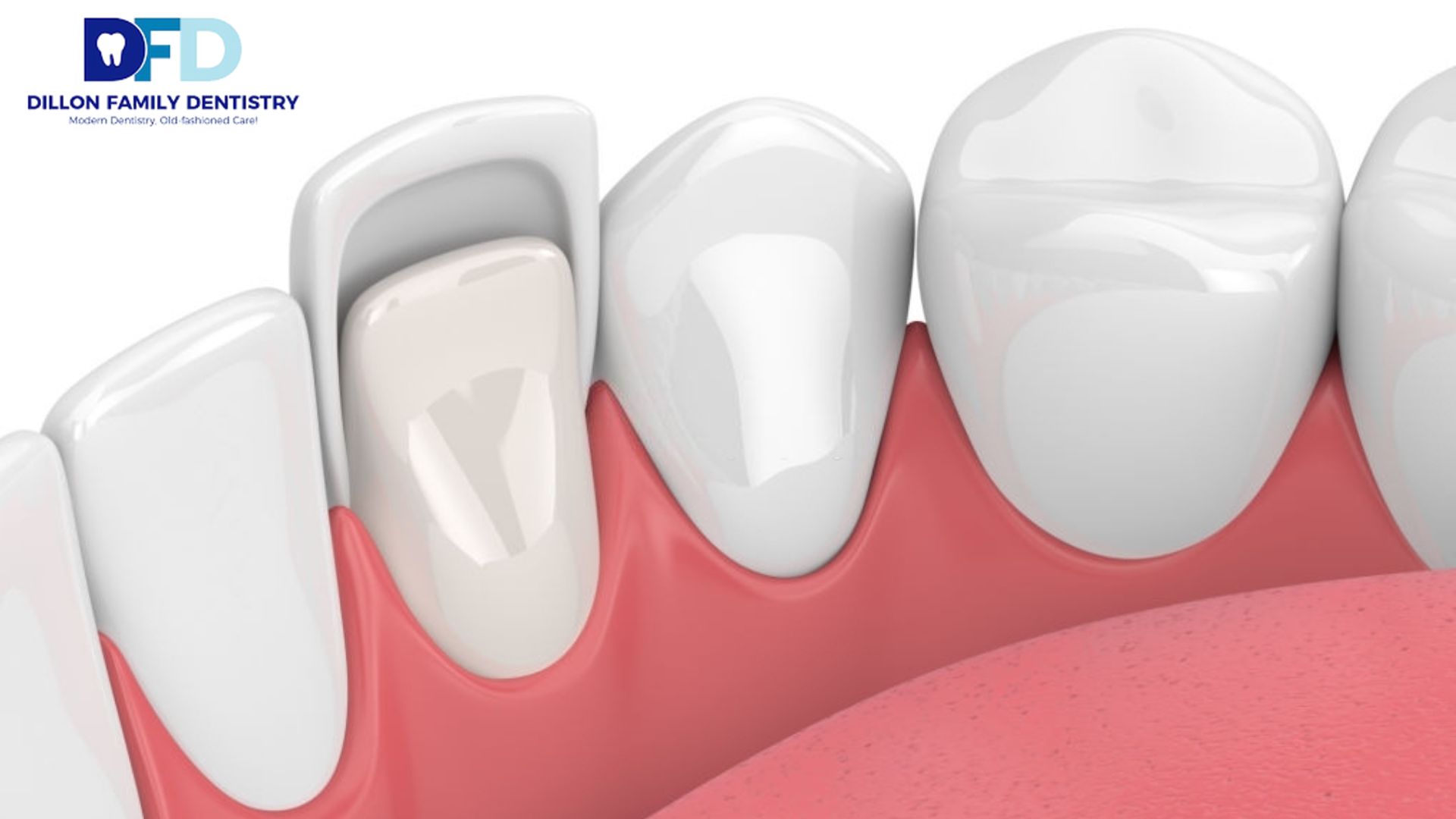
A veneer is a very thin, custom-designed cover that covers the front surface of a tooth. Veneers are designed to match the color, shape, and translucency of the surrounding teeth so closely that most people will not know you have had anything done; they will just see that your smile is attractive.
Some people assume veneers are pre-fabricated and won’t suit every tooth. In reality, they are highly customised and remarkably versatile. That matters, especially when nearly 45% of adults say a smile creates the most memorable first impression, according to the American Academy of Cosmetic Dentistry.
Let’s examine some specific types of dental problems that can be corrected using a veneer.
Dental Problems Veneers Can Actually Solve
Chipped or Cracked Teeth
Patients often seek a cosmetic dentist for a chipped tooth, whether it happened years ago during a sports injury or more recently from biting into something hard. Even a small chip can cause hesitation or embarrassment when you smile or speak.
For minor chips, composite veneers can be an effective solution. However, if the damage is more noticeable, porcelain veneers offer a stronger, more durable option and tend to last longer than composite alternatives.
Stubborn Staining and Discoloration
Although whitening procedures effectively correct yellowed teeth on the surface, some types of tooth stains are nearly impossible to whiten. For example, tetracycline antibiotic stains, excessive fluoride stains, and old dental work stains may not whiten with any amount of tray or session bleaching. Using porcelain veneers can provide an entirely different solution.
Since the colour of a veneer is selected and matched from the start, patients who have struggled for years with stained teeth can use porcelain veneers to finally achieve the brighter, consistent look they’ve been seeking.
Gaps Between Teeth
If you’re frustrated by the gaps between your front teeth but do not want to get braces to close them, a veneer might be just what you need. For example, one of our patients was a marketing professional from Wayne, Pennsylvania, and she had spent years considering getting braces for a small gap from her front teeth to her gums. She finally made the decision to get two veneers to fix the gap and did not require any braces to complete this process.
Worn Down or Short Teeth
Over time, teeth may suffer from wear and tear caused by grinding (bruxism), consuming acidic foods, or natural aging. When teeth have shortened significantly or become uneven due to any of these factors, it can alter the way you chew as well as your overall appearance. In such cases, veneers can be an effective solution. They add length to the tooth and restore proper proportion, helping your smile appear more balanced and youthful.
In cases where grinding is the culprit, your dentist may suggest that you also wear a nightguard for the duration of the time you’re wearing the new veneers. This will help protect your new dental veneers for many years to come.
Minor Misalignment and Uneven Teeth
Not all crooked teeth require braces. Teeth that are slightly rotated, mildly misaligned, or irregular in shape can often be corrected with veneers to create a more uniform, straighter appearance, sometimes referred to by cosmetic dentists as “instant orthodontics.
It’s important to note that veneers do not actually reposition teeth, so they are best suited for mild cases. If there are underlying bite or alignment issues, your dentist at Dillon Family Dentistry will advise whether orthodontic treatment should be considered first.
What the Veneer Process Looks Like, Step by Step
Understanding the process helps take the mystery and the anxiety out of it.
- Consultation: Your dentist evaluates your teeth, discusses your goals, and determines whether veneers are the right fit for your specific concerns
- Preparation: A small, thin layer of enamel is gently removed from the front of the tooth to make room for the veneer
- Impressions: Molds or digital scans of your teeth are taken and sent to a dental lab where your custom veneers are crafted
- Temporary veneers: In most cases, temporary covers are placed while you wait for the final set
- Bonding: Your permanent veneers are checked for fit and color, then bonded securely to your teeth with a strong dental adhesive
The entire process typically spans two to three visits over a few weeks, and most patients report little to no discomfort.