

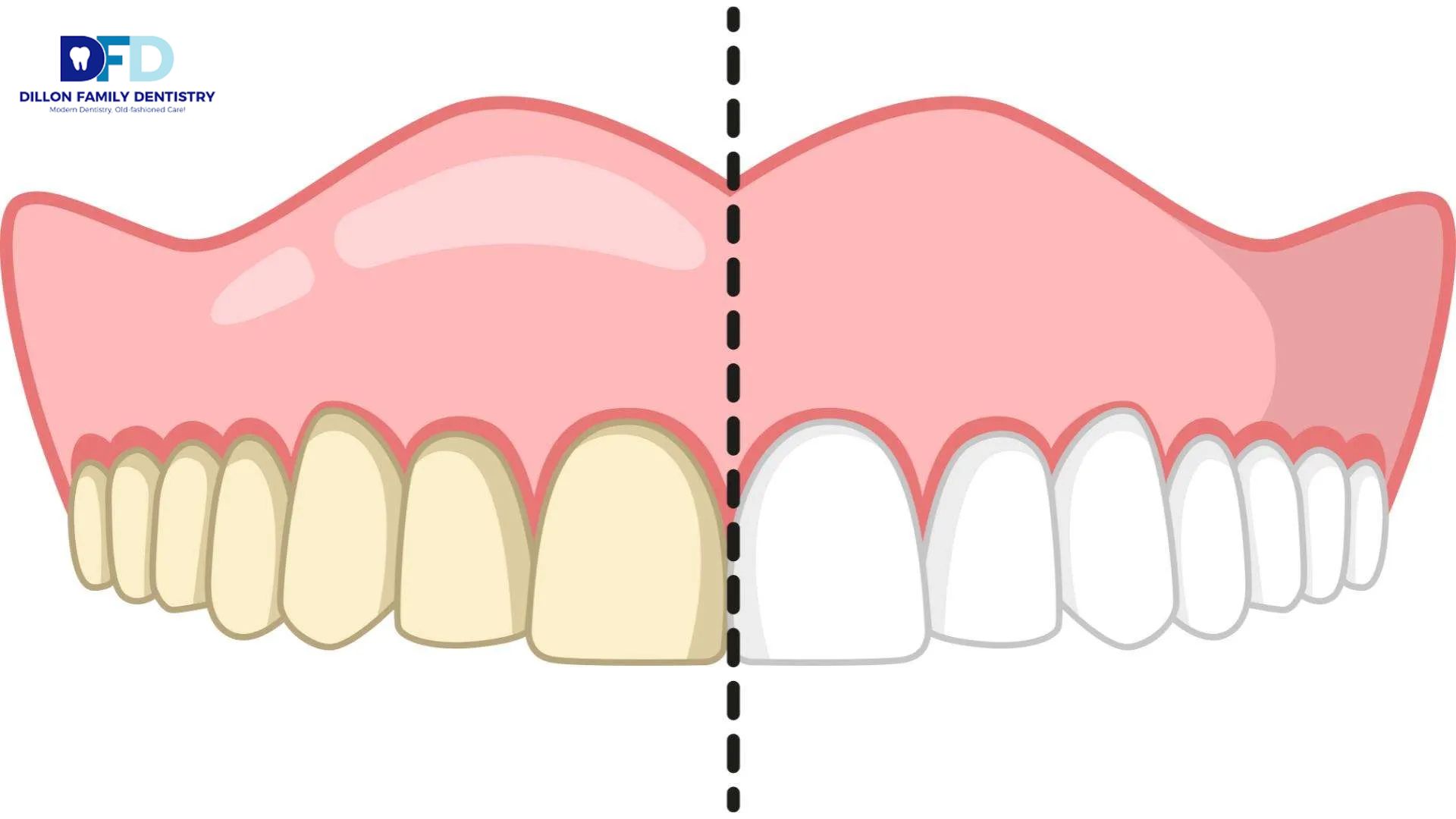
Tooth sensitivity after whitening is a common, temporary effect caused by whitening agents opening tiny channels in the enamel, allowing external stimuli to reach the nerve. This can lead to short, sharp discomfort that usually fades within 24 – 72 hours.
At Dillon Family Dentistry, Dr. David Dillon, DMD, uses professional whitening techniques to minimize sensitivity and protect your enamel. Simple steps like using desensitizing toothpaste, avoiding extreme foods, and following proper aftercare can help reduce discomfort. If sensitivity persists, a dental evaluation is recommended.
Most patients describe post-whitening sensitivity as a brief but sharp sensation; sometimes a twinge, sometimes a more pronounced sting triggered by temperature changes or certain foods. It tends to peak in the first day or two after treatment and then gradually fades.
What’s causing it comes down to chemistry and anatomy. Whitening products work by using peroxide-based agents, either hydrogen peroxide or carbamide peroxide, to break apart the stain molecules sitting inside your tooth enamel. In doing so, they temporarily open up tiny tubules in the dentin layer beneath the enamel. These tubules lead directly to the nerve of the tooth. When they’re exposed, external stimuli such as cold air, a sip of ice water, or even breathing through your mouth can reach the nerve much more easily than usual.
It’s a bit like taking a jacket off in the middle of winter. Your teeth haven’t been damaged, but their insulation has temporarily been reduced, and they’re reacting to everything around them.
Key Takeaways
- Post-whitening sensitivity is common and typically resolves within 24 to 72 hours
- Whitening agents temporarily open microscopic channels in enamel, exposing nerve endings
- Over-the-counter strips carry a higher sensitivity risk than supervised professional treatments
- The right post-whitening care tips can dramatically reduce discomfort and protect your results
- Patients with pre-existing enamel sensitivity should always consult a dentist before whitening
What the Sensitivity Actually Feels Like and Why It Happens
Post-whitening sensitivity tends to feel like a short and sharp sensation (twinge to more severe) and is usually experienced with temperature changes and certain foods at its height in the first few days after treatment, but decreases over time.
The reason for this type of sensitivity has to do with chemistry and anatomy. The process of whitening is performed using peroxide-based products (hydrogen peroxide or carbamide peroxide) that break apart the stain molecules that have accumulated in the enamel of the tooth. While breaking these stain molecules apart, the whitening agents chemically open the tiny tubules located in the dentin layer of the tooth that is directly beneath the enamel layer. By opening those tubules, the cord that connects the nerve of the tooth or pulp chamber to the external stimuli (cold air, drinking ice water, respiration through the mouth) can gain access to the nerve more readily.
Take, for instance, removing your coat outside in the middle of winter – your teeth do not have any physical damage, but the insulation covering your teeth has been temporarily removed, causing a heightened sensitivity to the environment surrounding your teeth.
The intensity of reaction will vary based on different factors such as the amount of whitening agent used, the length of application, the condition of your enamel prior to treatment, and whether or not you had any sensitivity before starting treatment.
Why Some Whitening Methods Cause More Sensitivity Than Others
The effectiveness of a tooth-whitening method is directly related to the method used. When using an over-the-counter product (such as whitening strips or trays), the peroxide concentration is typically lower than that used in a dentist’s office. As a result, over-the-counter products often have much longer exposure times to achieve results than those done in an office setting. Also, the longer exposure time can result in increased sensitivity, especially if the products do not fit your teeth properly or the gel comes into contact with the gums.
When teeth are whitened in an office in Bryn Mawr under the supervision of a dentist on the Main Line, professional whitening agents are used, but there are also essential factors in place to assist with protecting the tooth structure and tissue in the mouth. The dentist places a gum barrier to protect the tissues of the mouth while applying the whitening agent for a certain amount of time, and has the strength of the agent adjusted for the individual sensitivity of the mouth. As a result of these factors, the outcome is typically that of a whiter tooth with fewer side effects than from a product purchased at a store.
As noted by the American Dental Association, the use of a dentist for supervised professional whitening is still the most effective and safest approach for patients who have sensitive enamel or who have dental work that could be compromised from whitening processes, such as crowns or bonding work.
Step-by-Step: How to Manage Sensitivity After Whitening
Whether you whitened at home or in the office, these steps can help you recover comfortably and protect your enamel going forward.
Step 1: Switch to a Sensitivity-Specific Toothpaste
A dentist can give you toothpaste made for people with sensitive teeth before and after your teeth are whitened. These types of toothpastes contain ingredients such as potassium nitrate or stannous fluoride that help to calm the nerves in your teeth. Some people apply toothpaste directly to sensitive areas for a few minutes before brushing, rather than only using it during brushing, to get faster relief from sensitivity.
Step 2: Avoid Triggering Foods and Drinks Temporarily
For the first 48 hours post-whitening, give your teeth a break from extreme temperatures and acidic items. That means skipping:
- Very hot drinks like coffee and tea
- Ice-cold water, drinks, or ice cream
- Citrus fruits and juices
- Carbonated beverages
- Anything vinegar-based
This isn’t forever, just long enough for those dentinal tubules to close back up and the sensitivity to settle.
Step 3: Don’t Whiten Consecutively
Very often, patients will use whitening strips for several days in a row, hoping to see a quicker result. However, overuse can increase tooth sensitivity and doesn’t give enamel enough time to recover naturally. Therefore, it is advised that a person space their whitening strip applications in accordance with the recommended timing for the product, or consult their dentist regarding a slow-acting professional whitening plan.
Step 4: Ask About Fluoride Treatment
Fluoride treatments are commonly advised by Dillon Family Dentistry after teeth have been professionally whitened. A fluoride application will re-mineralize your tooth’s enamel and seal any tiny openings created by the whitening process. This takes just a few minutes but will significantly improve how your teeth feel in the following hours and days.
When Sensitivity Is a Sign of Something More
For most people, post-whitening sensitivity is mild and settles within a few days. However, if you experience sharp, lingering pain lasting more than a week, sensitivity isolated to one or two teeth rather than the entire arch, or pain that existed before whitening but has worsened, it’s best to consult your dentist. These signs may indicate an underlying issue that should be treated before any further cosmetic dental work.
In particular, if you have persistent sensitivity in one specific tooth after having your teeth whitened, this may be due to a serious underlying dental problem. Some potential underlying dental issues include a hairline fracture, a cavity, or a receding gum line. It is wise to visit a cosmetic dentist in the Main Line area for an evaluation before assuming that your post-whitening sensitivity is a normal occurrence.
Why Professional Whitening at Dillon Family Dentistry Is Different
Patients come to us at Dillon Family Dentistry because they want a professional whitening service, and it’s not so much about getting the desired whitening results as it is about getting an exceptional experience during their treatment and afterwards.
Before whitening begins, we evaluate the health of the patient’s enamel to ensure they will get the best result possible. We consider their existing sensitivity, dental work, and desired bleaching goal.
During the entire whitening experience, we provide protection for the gum tissue and continue to monitor your progress closely. After the whitening is complete, we will give you a complete set of instructions on how to maintain your results and comfort.
Many patients have told us that after they have used whitening strips for 6 months with little success and lots of sensitivity, they wish they had come to us first.
FAQs
1. How long do teeth whitening results typically last?
Results from Teeth whitening in Bryn Mawr can last anywhere from 6 months to 2 years, depending on your habits. Avoiding staining foods, smoking, and following proper post-whitening care tips can significantly extend the brightness of your smile.
2. Is professional teeth whitening better than at-home kits?
A professional whitening treatment performed by a cosmetic dentist on the Main Line is more effective and longer-lasting than over-the-counter kits. It uses stronger, safer agents and is customized to your teeth, delivering faster and more noticeable results.
3. Why do my teeth feel sensitive after whitening?
Tooth sensitivity after whitening occurs because whitening agents temporarily expose microscopic pores in the enamel. This can irritate nerves inside the tooth, especially if you already have enamel sensitivity or thin enamel.
4. How can I reduce sensitivity after a whitening treatment?
To manage enamel sensitivity, use desensitizing toothpaste, avoid very hot or cold foods, and follow your dentist’s advice. Many cosmetic dentists on the Main Line also recommend fluoride treatments to help strengthen enamel after whitening.
5. Is teeth whitening safe for enamel in the long term?
When done correctly, professional whitening treatment is safe and does not damage enamel. Dentists carefully control the process, ensuring your teeth remain healthy while minimizing risks like enamel sensitivity or irritation.
6. How many sessions are needed for noticeable whitening results?
Most patients see visible improvement after one session of teeth whitening in Bryn Mawr. However, deeper stains may require multiple visits to a cosmetic dentist in the Main Line for optimal, long-lasting results.
7. Can whitening remove deep stains or discoloration?
Whitening works well for surface stains but may not fully remove deep discoloration. A cosmetic dentist on the Main Line may recommend alternative treatments like veneers if professional whitening treatment doesn’t achieve the desired brightness.
8. What should I avoid eating or drinking after whitening?
After whitening, avoid coffee, tea, red wine, and dark-colored foods for at least 48 hours. Following proper post-whitening care tips helps prevent new stains while your enamel is temporarily more porous.
9. Does teeth whitening damage teeth or gums?
When supervised by a cosmetic dentist on the Main Line, whitening is safe. Some temporary gum irritation or tooth sensitivity after whitening may occur, but these effects usually fade within a few days.
10. What are the best post-whitening care tips for long-lasting results?
Effective post-whitening care tips include maintaining good oral hygiene, limiting staining foods, using a straw for beverages, and scheduling touch-ups. Regular dental visits also help preserve results from teeth whitening in Bryn Mawr.
Sensitivity After Whitening Is Normal, But It Doesn’t Have to Derail You
A little post-whitening sensitivity is the body’s way of reacting to a process that genuinely works. It’s not a sign that something went wrong; it’s a sign that the treatment reached where it needed to go. The key is knowing how to support your teeth through the recovery window, and making sure your whitening method was appropriate for your enamel in the first place.
If you’re dealing with discomfort after a recent whitening treatment, or if you’re considering teeth whitening in Bryn Mawr and want to start smart, Dillon Family Dentistry is here to help. Reach out to our Bryn Mawr or Main Line office and let’s build a whitening plan that gets you the results you want, comfortably.


