
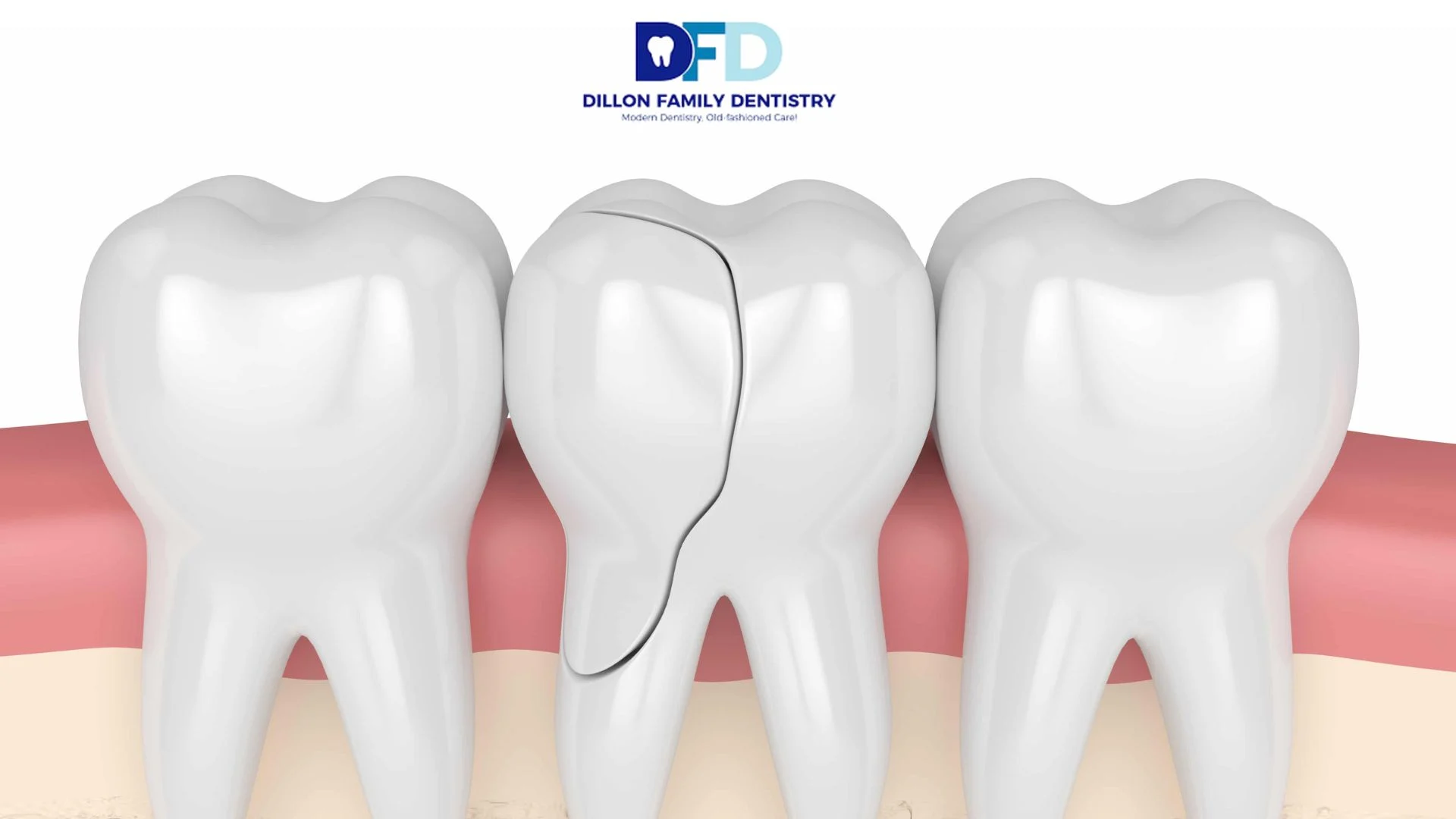
A cracked tooth can go from minor sensitivity to a full dental emergency in a matter of hours, especially if the crack reaches the pulp or the tooth splits. Dr. David Dillon at Dillon Family Dentistry on East Lancaster Avenue in Bryn Mawr, PA explains the warning signs, the immediate first-aid steps to take before you reach the office, and how we treat cracked teeth at every stage. If you have a cracked or broken tooth and you are on the Main Line, do not wait to call.
Let me be direct with you: a cracked tooth is not something you want to manage with home remedies and wishful thinking. I have been practicing family and emergency dentistry on East Lancaster Avenue here in Bryn Mawr for years, and one of the most common calls we get is from a patient who noticed some tooth sensitivity a few weeks ago, hoped it would pass, and is now in real pain. Cracked teeth do not heal on their own. They almost always get worse. And the earlier we catch them, the simpler and less invasive the treatment.
This guide covers everything you need to know: what a cracked tooth actually feels like, what to do in the first critical minutes before you reach our office, how we diagnose and treat fractures at every stage, and when a cracked tooth crosses from uncomfortable to a full dental emergency. If you are on the Main Line and you think you have cracked a tooth right now, stop reading and call us at 610-981-1997. Otherwise, read on.
What Are the Signs of a Cracked Tooth?
Cracked tooth symptoms can be frustratingly inconsistent, which is part of what makes them tricky to self-diagnose. The crack may not be visible to you, and the pain often comes and goes rather than being constant. Here is what my Bryn Mawr patients typically describe when they come in with a fracture:
- Sharp pain when biting down that disappears immediately when you release the pressure
- Sensitivity to hot or cold that lingers for a few seconds after the source is removed
- Intermittent pain that is hard to pin to a specific tooth
- Swollen or tender gum tissue along one side of a tooth
- Visible line or chip on the tooth surface, though many significant cracks are not visible at all
- A sudden sensation of something sharp on your tongue where a piece of tooth used to be
One hallmark of cracked tooth syndrome is that the pain often occurs specifically when you release biting pressure, not just when you apply it. If you bite on something and feel a sharp zing when you let go, that is a classic sign. The problem is this pattern can mimic other conditions like a high filling or even sinus pressure, which is why you need a clinical exam, not a guess.
Types of Cracked Teeth: Not All Fractures Are the Same
Part of why I spend time explaining fracture types to my patients is that the type of crack you have completely determines the treatment. There is no one-size-fits-all approach here. Here is the spectrum:
Craze Lines
These are tiny surface cracks in the enamel that almost every adult has to some degree. They do not hurt, do not require treatment, and are largely cosmetic. If your dentist tells you that you have craze lines, do not panic. We keep an eye on them, but they are rarely a clinical concern.
Fractured Cusp
A fractured cusp means one of the pointed chewing surfaces of your tooth has broken off, typically around an old filling. These fractures usually do not reach the pulp, so pain is manageable. Treatment typically involves a new filling or a crown, depending on how much tooth structure remains.
Cracked Tooth
This is the category most people mean when they say cracked tooth. The crack runs vertically from the chewing surface down toward the root. If the crack has not yet reached the pulp, a crown can typically hold the tooth together and stop the crack from deepening. If the pulp is involved, a root canal is needed first. This is exactly why timing matters.
Split Tooth
A split tooth is what happens when a cracked tooth goes untreated long enough that the crack travels all the way through the tooth, creating two separate segments. At this stage, the tooth usually cannot be saved in its entirety. Depending on the split, one portion may sometimes be preserved with a root canal and crown, but extraction is often the outcome. This is what I am trying to help you avoid.
Vertical Root Fracture
Vertical root fractures typically start at the end of the tooth’s root and move toward the top of the tooth. Because the symptoms of vertical root fractures usually appear only after a lot of bone has been lost from around the root, they are commonly diagnosed too late. When a tooth has a vertical root fracture, the usual outcome is the extraction of the tooth. Teeth that have had a root canal are more likely to develop vertical root fractures, and that is why we are more vigilant in monitoring them.
Cracked Tooth Emergency First Aid: What To Do Before You Call Us
I want to walk you through exactly what to do in the minutes after you crack or break a tooth. These steps will not fix the problem, but they will minimize damage, manage discomfort, and prepare you for your emergency dental appointment.
Step 1: Rinse With Warm Water
Use warm water to rinse the area of the tooth that has been cracked. Doing this will help to wash away any debris, and it will assist you with determining if there is any bleeding from your gum area. Using hot or cold water may irritate the exposed tooth and should not be done.
Step 2: Save Any Broken Fragments
If a piece of tooth has broken off, collect it and bring it to the appointment. Store it in a small container with either milk or your own saliva to keep it moist. We may or may not be able to bond it back, but having the fragment gives us useful information about the break angle and extent of the fracture.
Step 3: Apply a Cold Compress
You can help reduce your pain and swelling by using a cold pack or ice pack (wrapped in a towel) to apply cold to the outsides of your cheeks, close to the tooth that you are experiencing the pain from. Use the cold pack for a period of 15 to 20 minutes at a time. The cold will help reduce your swelling and provide significant pain relief for you without affecting your tooth.
Step 4: Take an Over-the-Counter Pain Reliever
I typically suggest ibuprofen (Advil, Motrin) as my first option since it helps with pain relief and swelling. If ibuprofen cannot be tolerated, acetaminophen (Tylenol) can also help with pain relief. However, both medications come with packaging that outlines proper dosages and how to take the medication. I also recommend against placing any of the tablets directly onto a tooth or gum tissue (particularly aspirin, as that will chemically burn the soft tissue), as that can create something additional to be concerned about.
Step 5: Avoid Biting on the Cracked Tooth
Until we have seen you, avoid using that tooth entirely. Stick to soft foods on the other side of your mouth. Every time you bite on a cracked tooth, you risk deepening the fracture or dislodging a fragment. Avoid anything hard, crunchy, sticky, very hot, or very cold until treatment is complete.
Step 6: Call Dillon Family Dentistry Immediately
Don’t wait around for pain to go away; call our office immediately at 610-981-1997! We consider dental emergencies a top priority, and one of those reasons is a painful crack in your tooth. The key difference between having a crown and having to have an extraction can be measured in hours sometimes. We are conveniently located at 1084 East Lancaster Avenue, Bryn Mawr, easily accessible to everyone living within Delaware County or Montgomery County.
Cracked Tooth Treatment Options in Bryn Mawr, PA
When you come in, here is what to expect from our evaluation and treatment process:
Clinical Exam and Diagnosis
A detailed examination will be done to find any cracks in the teeth. In order to ascertain whether or not there are any root fractures, I will use a dental explorer and magnifying lenses together with radiographs to determine the size of the fracture. Additionally, sometimes we will use a bite test or light transillumination to further assist in determining the exact position, as well as the depth, of the fracture. I want to be able to demonstrate to my patients what is happening and allow them to fully understand their diagnosis before I attempt to treat the tooth.
Dental Bonding
Composite resin bonded to the tooth’s surface is usually the best solution for small chips and shallow fractures that are confined to the enamel. The bonding procedure can restore the shape and function of the tooth in just one appointment. While not as strong as crowns on high-pressure back teeth, dental bonding can provide a flexible and conservative solution for certain types of cracks in specific locations.
Dental Crown
A crown is the gold standard treatment for a significantly cracked tooth because it holds the two sides of the crack together, distributing biting force evenly and preventing the fracture from deepening. At our Bryn Mawr office, we place beautiful, metal-free ceramic and porcelain-fused crowns that match the shade of your natural teeth. Learn more on our Dental Implants and Crowns page.
Root Canal Therapy
If the crack has reached or compromised the dental pulp, root canal therapy is necessary before the tooth can be restored. I know root canal has an undeserved reputation, and I want to be clear: modern root canal treatment under proper local anesthesia is no more uncomfortable than getting a filling. The procedure removes the inflamed or infected pulp, disinfects the canal system, and seals the tooth so it can be restored with a crown. Most of our root canals are completed in one visit.
Extraction as a Last Resort
When a tooth has split completely, developed a severe vertical root fracture, or has been cracked so long that the surrounding bone is compromised, extraction may be the only viable option. I take extraction seriously and always exhaust every conservative option first. If we do need to extract a tooth, we will discuss replacement options, including dental implants, bridges, and other restorations, so you leave our office with a clear plan.
When Is a Cracked Tooth a True Dental Emergency?
Not every crack demands the same urgency, but here are the situations where you should call us right away or, if it is after hours, head to an urgent care center or Bryn Mawr Hospital emergency department for initial pain management:
- A large piece of the tooth has broken off, exposing a raw, sensitive surface
- You are in moderate to severe pain that is not relieved by over-the-counter medication
- There is swelling in the jaw, gum, or face around the affected tooth
- You have a fever alongside tooth pain, which can signal an abscess
- The tooth is significantly loose or has been knocked partially out of position
- There is uncontrolled bleeding from the area around the cracked tooth
A dental abscess from an untreated crack is not just a dental problem. It is a systemic health issue. Oral infections can spread into the jaw, neck, and beyond if not treated promptly. Do not tough it out if these signs are present. Call us at 610-981-1997 or, if it is after hours, go to your nearest emergency facility for antibiotics and pain management, then come see us the next morning.